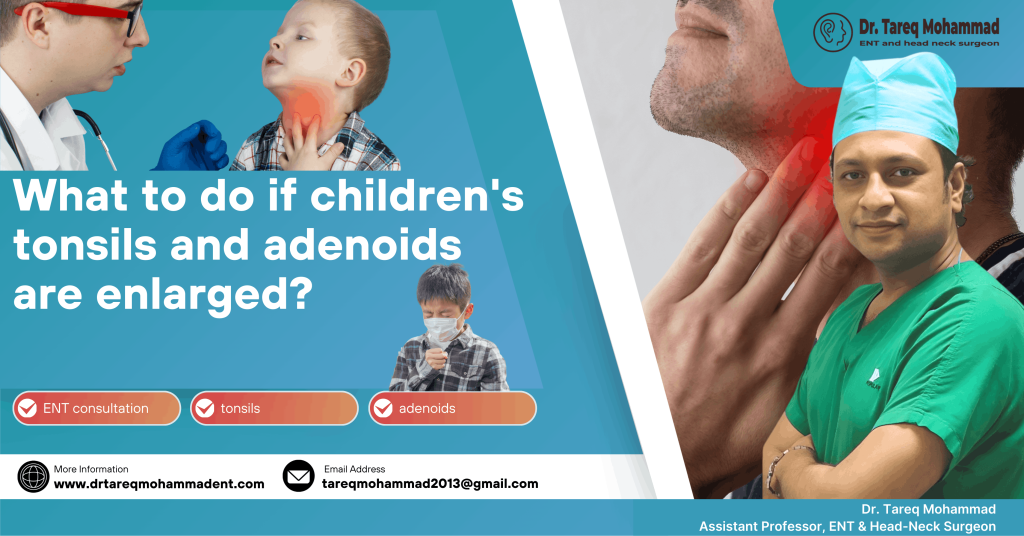
As an ENT specialist, I understand how worried parents feel when their child struggles to breathe at night or snores loudly. Enlarged tonsils and adenoids are common childhood conditions I treat regularly, and I want to assure you that effective solutions are available. In this guide, I’ll help you recognize the symptoms, understand the causes, and know when your child needs medical intervention.
Understanding Enlarged Tonsils and Adenoids
Tonsils are the two lumps of tissue at the back of your child’s throat, while adenoids sit higher up, behind the nose. Both are part of the immune system, helping fight infections during early childhood.
However, sometimes these tissues become enlarged, a condition called adenoid hypertrophy, which affects the adenoids. When I examine children with this condition, the tonsils may be so large they nearly touch each other, and the adenoids can block the nasal passages.
Why does this matter? Enlarged tonsils in children can obstruct breathing, disrupt sleep, and affect your child’s overall development and quality of life.
Recognizing Symptoms of Enlarged Tonsils and Adenoids
In my practice, parents often describe similar warning signs. Watch for these symptoms in your child:
Breathing and Sleep Issues:
✦Loud snoring or noisy breathing during sleep
✦Pauses in breathing (sleep apnea)
✦Mouth breathing, especially at night
✦Restless sleep or unusual sleeping positions
Throat and Nose Problems:
✦Frequent throat infections or tonsillitis
✦Chronic nasal congestion
✦Persistent runny nose
✦Difficulty swallowing
✦Muffled or nasal-sounding voice
Behavioral and Developmental Concerns:
✦Daytime drowsiness or fatigue
✦Poor concentration at school
✦Behavioral problems
✦due to poor sleep quality
✦Bedwetting in previously dry children
Ear-Related Symptoms:
✦Recurrent ear infections
✦Fluid in ear (middle ear effusion)
✦Temporary hearing problems
If your child shows several of these symptoms, I recommend scheduling an evaluation with an ENT specialist.
Common Causes of Enlarged Tonsils and Adenoids
Through years of treating children, I’ve identified several primary causes:
Recurrent Infections: Repeated throat infections cause tonsils and adenoids to swell. Even after the infection clears, the tissues may remain enlarged.
Chronic Inflammation: Persistent inflammation from allergies or irritants keeps these tissues enlarged.
Natural Growth Pattern: Some children simply have naturally larger tonsils and adenoids—it’s part of their anatomy.
Infections: Bacterial and viral infections, including strep throat, commonly cause temporary enlargement that may become chronic.
It’s important to understand that enlarged tonsils and adenoids are most common between ages 3-7, when these tissues are naturally at their largest relative to the airway size.
Treatment Options for Enlarged Tonsils and Adenoids
Watchful Waiting
If your child has mild symptoms without breathing difficulties, I often recommend monitoring the situation. Many children outgrow this condition as they get older and their airways naturally become larger.
Medical Management For children with inflammation or allergies, I may prescribe:
✦Nasal steroid sprays to reduce adenoid size
✦Antibiotics for bacterial infections
✦Allergy medications to control inflammation
✦Anti-inflammatory medications
Surgical Treatment: Tonsillectomy and Adenoidectomy
When symptoms significantly affect your child’s quality of life, I discuss tonsils and adenoids treatment through surgery.
I recommend this procedure when children experience:
✦Severe sleep apnea or breathing obstruction
✦Recurrent tonsillitis (typically 7+ episodes in one year, 5+ per year for two years, or 3+ per year for three years)
✦Persistent ear infections with fluid in ear
✦Difficulty swallowing or eating
✦Speech problems due to enlarged adenoids
The surgery is safe, well-established, and performed as an outpatient procedure. Most children recover within 7-10 days and experience dramatic improvement in their symptoms.
Post-Operative Care After surgery, I provide detailed instructions including:
✦Pain management strategies
✦Dietary guidelines (soft, cool foods)
✦Activity restrictions
✦Signs of complications to watch for
When to See an ENT Specialist
As a parent, trust your instincts. Schedule an appointment with me if your child experiences:
✦Breathing difficulties during sleep or pauses in breathing
✦Persistent snoring that disrupts sleep quality
✦Recurrent throat infections affecting school attendance
✦Chronic mouth breathing and nasal congestion
✦Behavioral or concentration problems linked to poor sleep
✦Hearing problems or frequent ear infections
✦Failure to thrive or difficulty gaining weight
These symptoms indicate that enlarged tonsils in children require professional evaluation. Early intervention prevents complications and improves your child’s development and wellbeing.
Prevention and Home Care Tips
While you can’t always prevent adenoid hypertrophy, these strategies help:
✦Maintain good hand hygiene to reduce infections
✦Keep your child’s vaccinations current
✦Avoid secondhand smoke exposure
✦Manage allergies effectively
✦Encourage healthy sleep habits
✦Ensure adequate hydration
✦Use a humidifier in your child’s bedroom
Need expert consultation?
Concerned about your child’s enlarged tonsils and adenoids?
Don’t let sleep disruption and breathing difficulties affect your child’s development. Schedule a consultation with Dr. Tareq Mohammad for expert evaluation and personalized treatment.
 Call: +8801537240658
 Email: tareqmohammad2013@gmail.com
 Visit: Popular Medical College Hospital, Dhanmondi, House # 25, 25 Road No. 2, Dhaka 1205 Go For Online booking
Let’s help your child breathe easier and sleep better. Contact Me today.
Enlarged tonsils and adenoids are common but treatable conditions. As your child’s ENT specialist, I’m committed to providing accurate diagnosis, conservative management when appropriate, and expert surgical care when necessary. The goal is always to improve your child’s breathing, sleep quality, and overall health. Remember, early evaluation leads to better outcomes and prevents long-term complications.
Frequently Asked Questions
At what age can children have tonsil and adenoid surgery?
In my practice, I perform this surgery on children as young as 2-3 years old when medically necessary, particularly for severe sleep apnea. However, each case is individual, and I carefully evaluate whether the benefits outweigh the risks based on your child’s specific situation.
Will removing tonsils and adenoids weaken my child's immune system?
This is a common concern I address with parents. Research shows that removing enlarged tonsils and adenoids doesn’t compromise immune function. Your child has many other immune system components that continue protecting them from infections
How long is the recovery period after surgery?
Most children recover within 7-10 days. I provide comprehensive post-operative instructions and remain available to address any concerns during your child’s recovery period.