Child Snoring Adenoids – Causes, Signs & Treatment
Blog Single


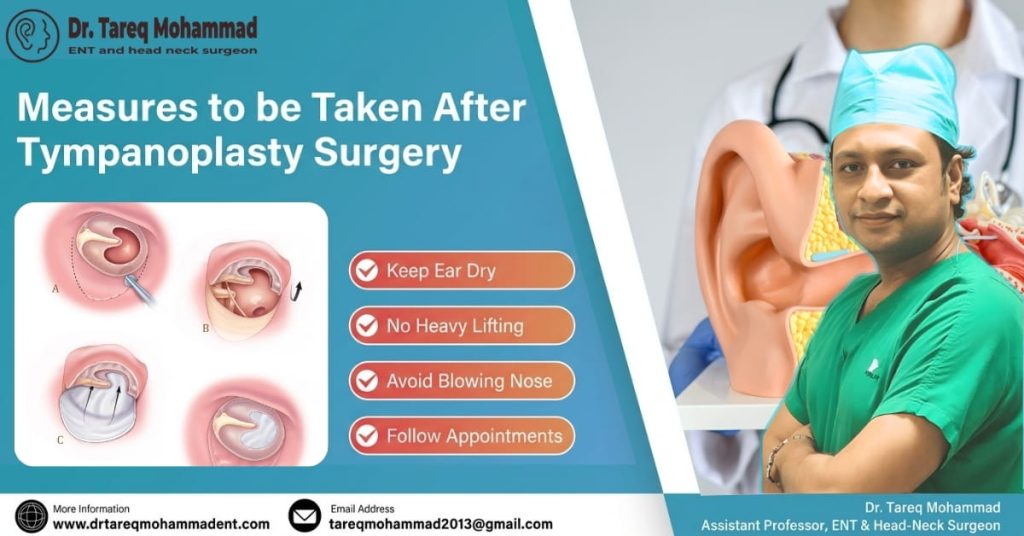
I’m Dr. Tareq Mohammad, and I want to guide you through what comes next after your tympanoplasty surgery. This eardrum Surgery procedure is one of the most common ear surgeries I perform, and I’m pleased to share that when patients follow proper post-operative care measures, recovery outcomes are generally excellent. Whether you’re experiencing conductive hearing loss or chronic ear infections, understanding what to do—and what to avoid—during your recovery is crucial for successful healing. In this guide, I’ll walk you through everything you need to know to ensure your eardrum heals properly.
Before we discuss post-operative care, let me briefly explain what occurs during tympanoplasty surgery. During this procedure, I carefully place a tissue graft (usually from your own fascia or cartilage) to Surgery a perforation in your eardrum. The surgery typically takes 30-45 minutes and is performed under general anesthesia, making it a comfortable experience for you. Most patients go home the same day, which is why proper home care becomes your responsibility—and mine is to ensure you’re fully prepared.
The initial seven days are perhaps the most important for your recovery. This is when the graft is still fragile and requires protection.
Keep Your Ear Dry—This Is Non-Negotiable:
> I cannot stress this enough: moisture is the enemy of your healing eardrum. Avoid water entry completely for at least 7-10 days.
> When showering, I recommend placing a cotton ball coated with petroleum jelly into your ear canal before you step into the shower.
> Skip baths entirely during the first two weeks; showers with precautions are safer.
> Do not swim, dive, or expose your ear to water activities for at least 3-4 weeks post-op.
Manage Pain and Discomfort:
> You’ll receive a prescription for pain medication. Take it as directed, especially before bed to ensure quality sleep—rest accelerates healing.
> Over-the-counter pain relievers (acetaminophen or ibuprofen) work well for mild discomfort.
> Apply a warm compress to the external ear area if you experience mild pain (avoid placing anything directly in the ear canal).
Control Drainage:
> Some clear or slightly bloody drainage from the ear canal is completely normal and expected.
> Use the ear packing I place during surgery—don’t remove it yourself, and change it only as I’ve instructed.
> If you experience excessive drainage or foul-smelling discharge, contact my office immediately, as this could indicate infection.
Recovery from tympanoplasty surgery requires patience and sensible lifestyle adjustments. I know these restrictions may feel inconvenient, but they’re essential for preventing complications.
What You Should Avoid:
What You Can Resume Gradually:
> Light walking (30 minutes daily) can resume after 3-4 days.
> Desk work and light household tasks are fine immediately.
> You can carefully clean the outer part of your ear using a soft, dry cloth .
Your hearing protection during recovery is part of my care plan for you. I want you to understand why specific precautions matter.
Why Moisture Protection Matters: Water in the ear canal increases infection risk and can destabilize the graft. The epithelial layer of your eardrum needs approximately 2-4 weeks to fully reepithelialize before I consider your eardrum healed enough to tolerate water exposure.
Proper Ear Packing Management:
> Don’t remove the ear packing yourself—this is a common mistake that delays healing.
> I’ll instruct you on when to remove it or when to return for removal.
> If the packing becomes loose or falls out, contact my office immediately; don’t attempt to reinsert it.
Signs of Infection (Contact Me If You Notice These):
> Increased drainage with a foul odor
> Persistent ear pain that worsens after improving
> Fever above 101°F (38.3°C)
> Redness or warmth around the external ear
> Hearing deterioration
Proper medication adherence and timely follow-ups directly influence your surgical success.
Your Post-Operative Medications:
> Antibiotic Ear Drops: If I prescribe these, apply exactly as directed. Never use over-the-counter drops without my approval.
> Pain Medication: Use as prescribed, typically for 3-5 days.
> Oral Antibiotics: Complete the full course even if you feel better—this prevents post-operative infections.
Follow-Up Schedule:
I schedule my tympanoplasty patients for follow-up visits at:
> Day 7-10: First post-op check to remove ear packing and assess healing
> Week 4: Second visit to confirm graft integration
> Week 8-12: Final check to confirm complete healing and water clearance
These appointments allow me to monitor your progress and catch any complications early. Please don’t miss them; they’re as important as the surgery itself.
Understanding the timeline helps you set realistic expectations for your recovery.
Week 1-2 (Post-Operative Period):
> Continue strict water avoidance
> Minimal activity; rest is primary focus
> Pain management as needed
Week 3-4:
> Light activities and gentle exercise permitted
> No swimming or water immersion yet
> Return to work if your job is non-strenuous
Week 4-6:
> Most people can resume normal daily activities
> Still avoid swimming and high-impact sports
> Hearing often begins improving noticeably
Week 6-8:
> Most restrictions lift if healing is on track
> Discuss swimming and sports timeline with me specifically
> Full return to normal activity (this varies by individual)
Return to Swimming: This requires special discussion. Most patients can safely return to swimming 4-6 weeks post-op, but I evaluate each case individually during your follow-up appointments.
I always tell my patients that what you do away from my office matters as much as the surgery itself.
Nutrition for Healing:
> Eat protein-rich foods: chicken, fish, eggs, legumes
> Consume foods high in vitamins C and A: citrus fruits, leafy greens, carrots
> Stay hydrated—drink at least 8 glasses of water daily
> Avoid anti-inflammatory medication except as prescribed; it can slow bone/tissue healing
> Limit alcohol, which can interfere with medication and slow healing
Sleep Quality:
> Sleep 7-9 hours nightly—this is when most healing occurs
> Sleep on your non-operative side or with your head elevated 30 degrees
> Use extra pillows to prevent accidentally lying on your operative ear
> Good sleep accelerates recovery and reduces complications
One question every patient asks me: “When will my hearing return?” Let me address this honestly.
Realistic Expectations:
> Some patients notice improvement within days; others take weeks or months.
> Peak hearing improvement typically occurs 6-12 weeks post-op as swelling fully resolves.
> Tympanoplasty success rate is approximately 85-90%, meaning the graft takes in most cases.
> If your hearing doesn’t improve significantly, additional procedures may be considered.
Hearing Tests: I schedule formal audiometry (hearing tests) at 6-8 weeks post-op to objectively measure improvement. This also helps us determine if additional treatment is needed.
I want you to know that tympanoplasty surgery is one of the most gratifying procedures I perform because when patients follow these post-operative measures, the results are consistently excellent. Your responsibility doesn’t end when you leave my operating room—it’s really just beginning. By keeping your ear dry, protecting it from pressure changes and loud noises, attending all follow-ups, and giving your body proper nutrition and rest, you’re actively participating in your own successful recovery.
I’ve guided hundreds of patients through this exact recovery process, and I can assure you that the temporary inconveniences—avoiding water, limiting activities, keeping appointments—are minor compared to the long-term benefits of restored hearing and eliminated ear infections. Trust the process, follow these measures diligently, and you should expect excellent outcomes.
If you have any concerns during your recovery, no matter how small, please don’t hesitate to contact my office. That’s what I’m here for.
Have Questions About Your Tympanoplasty Recovery?
I encourage you to schedule a consultation with me to discuss your specific situation or to clarify any recovery measures. Every patient is unique, and I want to ensure you receive personalized guidance.
Contact Dr. Tareq Mohammad:
Phone: +8801537240658
Email: tareqmohammad2013@gmail.com
Office Location: Popular Medical College Hospital, Dhanmondi, House # 25, 25 Road No. 2, Dhaka 1205
Online Booking: Dr. Tareq Mohammad
Don’t let uncertainty slow your recovery. Reach out today.
Q1: How long before I can shower after tympanoplasty surgery?
You can shower after 24-48 hours, but you must protect your ear. Use the petroleum jelly-coated cotton ball method I’ve described. Full water exposure without protection should wait until I give you clearance at your follow-up visit, typically 2-3 weeks post-op.
Q2: Can I fly after tympanoplasty surgery?
I recommend avoiding air travel for at least 2-3 weeks post-op. Air pressure changes can strain your healing graft. If flying is absolutely necessary before three weeks, contact my office—we may need to discuss alternatives or special precautions.
Q3: When is my hearing supposed to improve after tympanoplasty?
Most patients notice gradual improvement beginning around week 2-3, with significant improvement by 6-8 weeks. Some take up to 3 months. We’ll measure improvement objectively with hearing tests at 6-8 weeks post-op. Patience is essential here.
Q4: What should I do if my ear starts draining foul-smelling fluid?
Contact my office immediately. While some clear or slightly bloody drainage is normal, foul-smelling drainage suggests infection. Early treatment prevents complications, so don’t delay—call me.
Q5: Can I wear a hearing aid after tympanoplasty surgery?
Discuss this with me during your follow-up visits. Hearing aid fitting typically occurs 6-8 weeks post-op after your graft is fully stable and hearing improvement has plateaued. This timing ensures proper fitting and prevents hearing aid-related complications.
Dr. Tareq Mohammad, MBBS, FCPS (ENT – Head & Neck Surgery), Assistant Professor at Popular Medical College Hospital, providing advanced ENT care with compassion and expertise.
© Copyright 2026 Dr. Tareq Mohammad - All Rights Reserved.
Need help? Team is just a message away