Many patients come to me describing a dull, pressing pain around their forehead, cheeks, or behind the eyes, and they usually call it a “sinus headache.” In my practice, this is one of the most common complaints I hear, especially during seasonal weather changes or after a cold that doesn’t fully go away.
A sinus headache happens when the sinuses — the air-filled spaces inside your skull around your nose and eyes — become inflamed or blocked. When the lining swells, pressure builds up inside these spaces, and that pressure is felt as pain in the face or head.
What Causes a Sinus Headache?
The most common cause is sinusitis, which means inflammation or infection of the sinus lining. This can happen because of:
✦A viral cold that spreads into the sinuses
✦Bacterial infection following a cold
✦Allergies that cause ongoing swelling in the nasal passages
✦Nasal polyps or a deviated nasal bone that blocks normal drainage
✦Sudden changes in air pressure, such as during flights
When the sinus openings get blocked, mucus cannot drain properly. This trapped mucus increases pressure inside the sinus cavities, which is what produces the heavy, aching sensation patients describe.
What Does a Sinus Headache Feel Like?
Patients usually describe:
✦A constant, dull pressure rather than a sharp pain
✦Pain that gets worse when bending forward or lying down
✦Tenderness over the cheeks, forehead, or around the eyes
✦Pain that often comes with nasal congestion, thick nasal discharge, or reduced sense of smell
✦Symptoms that may worsen in the morning
This pattern is one of the main clues I use when evaluating whether a headache is truly coming from the sinuses.
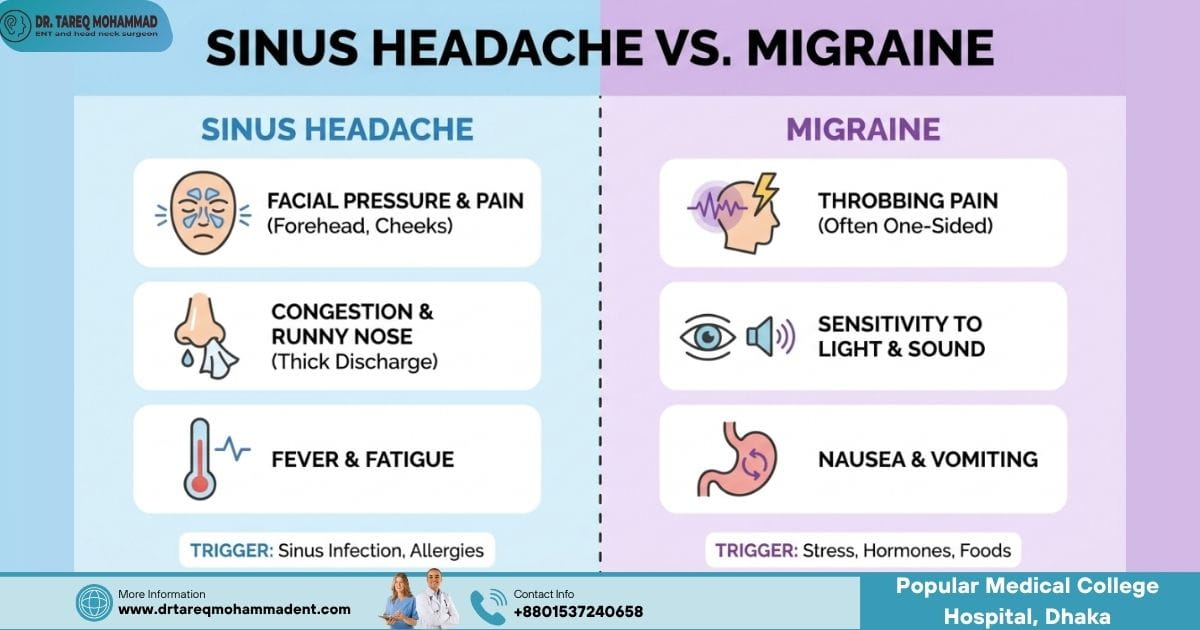
Sinus Headache vs. Migraine: What's the Difference?
This is one of the most important distinctions I make in clinic, because many people are treated for years for “sinus headaches” that are actually migraines.
What causes nasal obstruction and pain that mimics sinus problems in migraine?
Migraines can also cause facial pressure and nasal congestion due to nerve pathways shared between the sinuses and the brain, which is why the two are so often confused.
Key differences I look for:
Migraines often include throbbing pain on one side, sensitivity to light or sound, and nausea — sinus headaches usually don’t
✦Sinus headaches are typically accompanied by thick, colored nasal discharge; migraines usually are not
✦Sinus headache pain often worsens with bending forward; migraine pain is more commonly triggered by light, stress, or certain foods
✦Fever is more common with sinus infections than with migraines
If a patient has been told repeatedly that they have “chronic sinus headaches” but standard sinus treatment isn’t helping, I always consider migraine as a possibility.
How Is a Sinus Headache Diagnosed?
When I evaluate a patient with facial pain and congestion, I typically:
✦Take a detailed history of symptoms and their pattern
✦Examine the nose using nasal endoscopy to check for swelling, polyps, or blockage
✦Check for tenderness over the sinus areas
✦Consider imaging, such as a CT scan, if symptoms are severe, recurrent, or unclear
Imaging is not needed for every patient. I usually reserve it for cases that don’t improve with initial treatment or where the diagnosis is uncertain.
Treatment Options for Sinus Headache
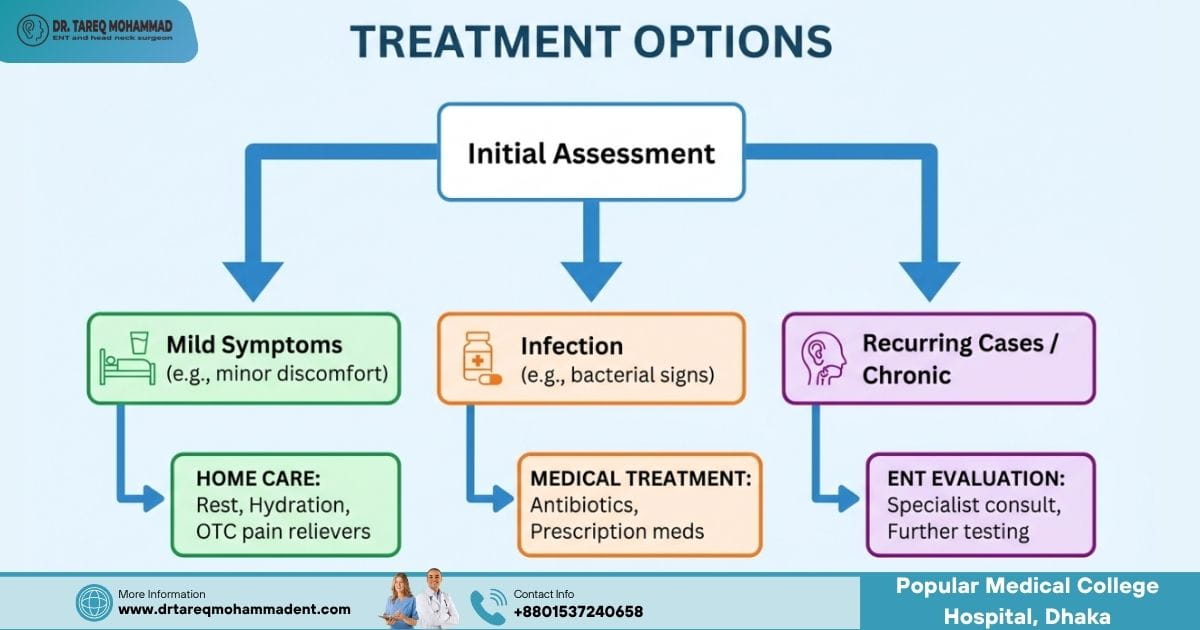
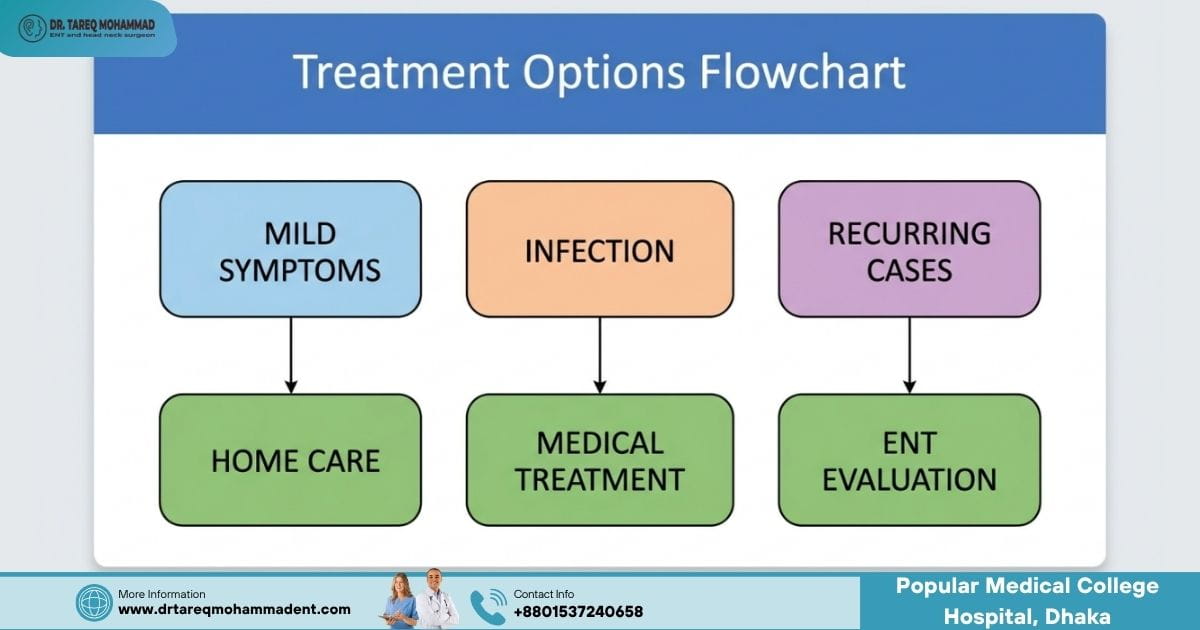
Treatment depends on the underlying cause.
For mild, short-term sinus congestion:
✦Saline nasal rinses to clear mucus
✦Steam inhalation
✦Adequate hydration
✦Over-the-counter decongestants for short-term use only
For infection-related sinusitis:
✦Antibiotics, if a bacterial infection is confirmed
✦Nasal corticosteroid sprays to reduce inflammation
✦Pain relief as needed
For allergy-related sinus headaches:
✦Identifying and avoiding triggers
✦Antihistamines
✦Long-term nasal steroid use under medical guidance
For structural problems:
✦If a deviated nasal bone, chronic polyps, or persistent blockage is causing repeated sinus headaches, surgery may be considered — but only after conservative treatment has been tried first.
I never recommend surgery as a first step. It’s usually considered only when medical treatment fails to control recurring symptoms.
When Should You See an ENT Specialist?
I usually advise patients to get evaluated when:
✦Headaches occur frequently or don’t improve with basic care
✦Facial pain is accompanied by fever or thick discolored discharge
✦Symptoms last more than 10–12 days without improvement
✦There is a history of previous sinus surgery with returning symptoms
✦Vision changes, severe swelling, or confusion occur — these need urgent evaluation
Persistent or recurring sinus headaches deserve a proper evaluation rather than repeated self-treatment, because the underlying cause can usually be identified and managed effectively.
Assistant Professor, Department of ENT & Head-Neck Surgery
If your headaches keep returning or aren’t improving with basic care, it’s worth getting your sinuses properly evaluated.
Dr. Tareq Mohammad sees patients at Popular Medical College Hospital, Dhanmondi, Dhaka — book a consultation to find out what’s really causing your symptoms.
Can Sinus Headaches Be Prevented?
While not every case can be prevented, patients can reduce their risk by:
✦Managing allergies proactively
✦Using saline rinses during high-pollution or high-pollen periods
✦Treating colds early to prevent them from progressing into sinus infections
✦Addressing structural nasal issues if they cause repeated blockage
Frequently Asked Questions (FAQs)
What does a sinus headache feel like?
A sinus headache usually feels like a dull, constant pressure around the forehead, cheeks, or behind the eyes, often worsened by bending forward and accompanied by nasal congestion.
Is a sinus headache serious?
Most sinus headaches are not serious and improve with basic treatment. However, if pain is severe, accompanied by high fever, or doesn’t improve within 10–12 days, it should be evaluated by a specialist.
Can a sinus headache be treated without surgery?
Yes. Most cases resolve with saline rinses, decongestants, nasal steroid sprays, or antibiotics when there’s an infection. Surgery is only considered when these treatments fail and the problem keeps recurring.
How can I tell if it’s a sinus headache or a migraine?
Sinus headaches usually come with thick nasal discharge and congestion, while migraines more often involve throbbing pain, light sensitivity, and nausea without significant nasal discharge.
Can children get sinus headaches?
Yes, children can develop sinus-related headaches, particularly if they have frequent colds, allergies, or enlarged adenoids affecting sinus drainage.
How long does a sinus headache typically last?
Depending on the cause, symptoms can last a few days to two weeks. Headaches lasting longer than this, or recurring frequently, should be evaluated.
When should I see an ENT specialist for a sinus headache?
If headaches are frequent, don’t respond to basic treatment, or are accompanied by fever, vision changes, or thick discharge, it’s time to see an ENT specialist.