Blog Single
Nasal Polyps Treatment – Symptoms, Causes & Surgery


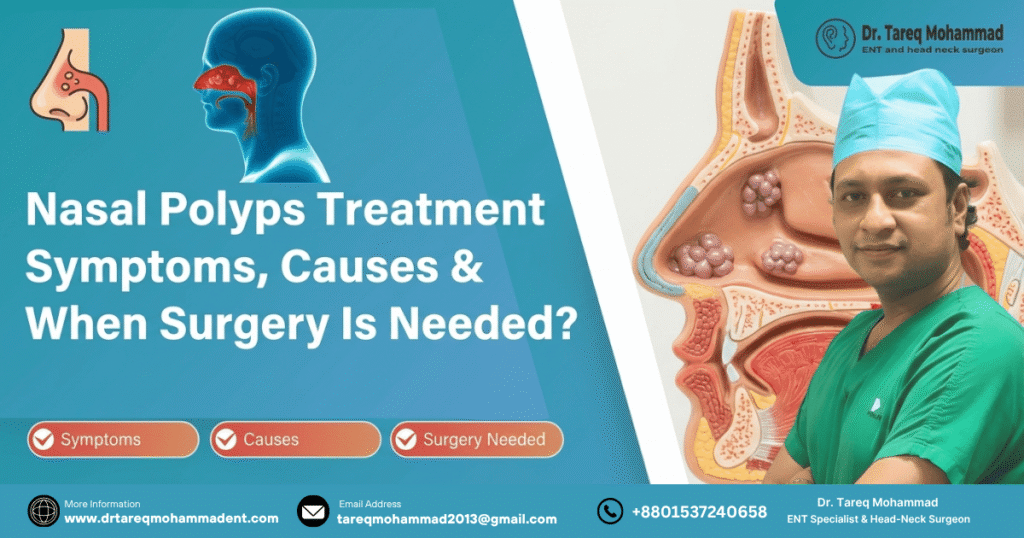
Nasal Polyps Treatment: Symptoms, Causes & When Surgery Is Needed
Quick Answer:
Nasal polyps treatment usually starts with nasal steroid sprays and other medicines to shrink the swelling. If symptoms continue despite proper medical therapy, an ENT specialist may recommend endoscopic sinus surgery to remove the polyps and improve airflow. Because polyps can return, follow-up care and allergy control are an important part of treatment.
A blocked nose that never seems to clear, a weak sense of smell, and a constant feeling of pressure in your face can make daily life exhausting. For many people, the cause is nasal polyps, and the right nasal polyps treatment can bring real relief.
Nasal polyps are soft, painless swellings inside the nose and sinuses. They are usually non-cancerous, but they can block breathing and keep coming back if the underlying inflammation is not controlled. Dr. Tareq Mohammad is an ENT specialist in Dhaka who treats nose and sinus problems with modern endoscopic methods at Popular Medical College Hospital in Dhanmondi, Dhaka. In this guide, you will learn what causes polyps, which symptoms to watch for, how doctors diagnose them, and when surgery is needed.
What Are Nasal Polyps?
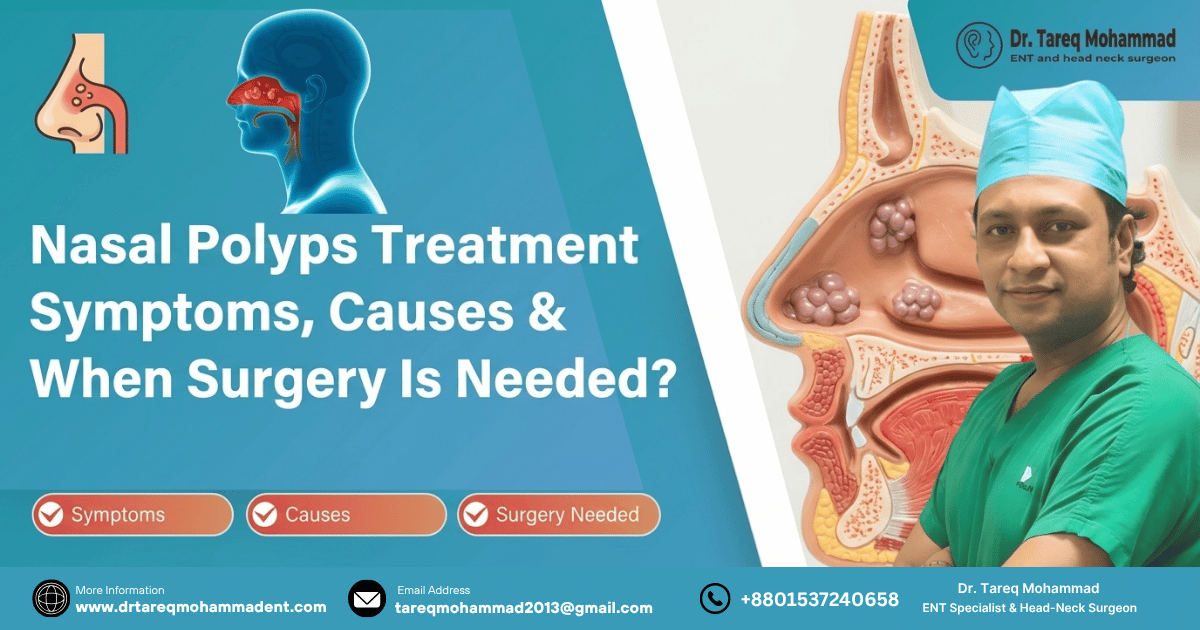
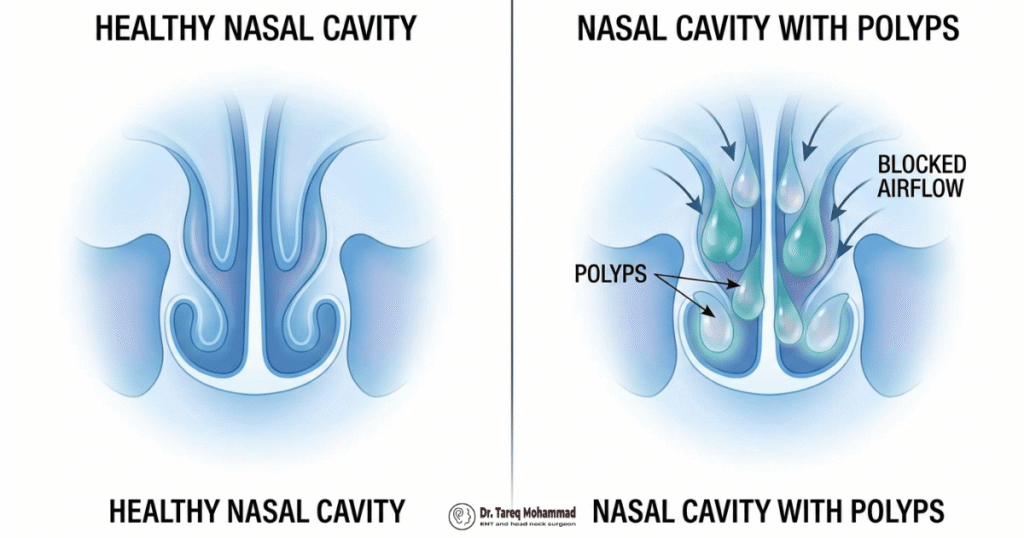
Nasal polyps are soft, painless, teardrop-shaped growths that form on the lining of the nose or sinuses. They develop when this lining stays swollen and inflamed for a long time.
Polyps are not the same as a common cold. A cold usually settles within a week or two, while polyps cause symptoms that last for months. Small polyps may cause no problem at all. Larger ones, or several together, can block the natural drainage paths of the sinuses and make nasal breathing difficult.
Because the symptoms look like allergy or a sinus infection, many people live with polyps for a long time before getting checked. An ENT examination is the only reliable way to tell them apart.
What Causes Nasal Polyps?
The exact cause is not fully understood, but nasal polyps are linked to long-term inflammation of the nose and sinus lining. Several conditions are commonly associated with them:
✦ Chronic sinusitis: repeated or long-lasting sinus inflammation
✦ Allergic rhinitis: ongoing nasal allergy; read our guide on allergic rhinitis
✦Asthma: especially asthma that is hard to control
✦Aspirin or NSAID sensitivity: some people react to these medicines with nasal and breathing symptoms
✦Recurrent infections: repeated infections can keep the lining inflamed
✦Inherited conditions: such as cystic fibrosis, mainly in children, which is why a polyp in a child should always be checked
Dust, smoke and pollution may worsen inflammation. Having one of these conditions does not mean you will develop polyps, and some people have no clear trigger at all.
What Are the Symptoms of Nasal Polyps?
The most common symptom is a stuffy, blocked nose that does not improve with usual home remedies.
Symptoms build up slowly and usually affect both sides of the nose. Common signs include:
✦Persistent nasal blockage or congestion
✦Runny nose or mucus dripping down the throat (postnasal drip)
✦Reduced or lost sense of smell, and dull taste
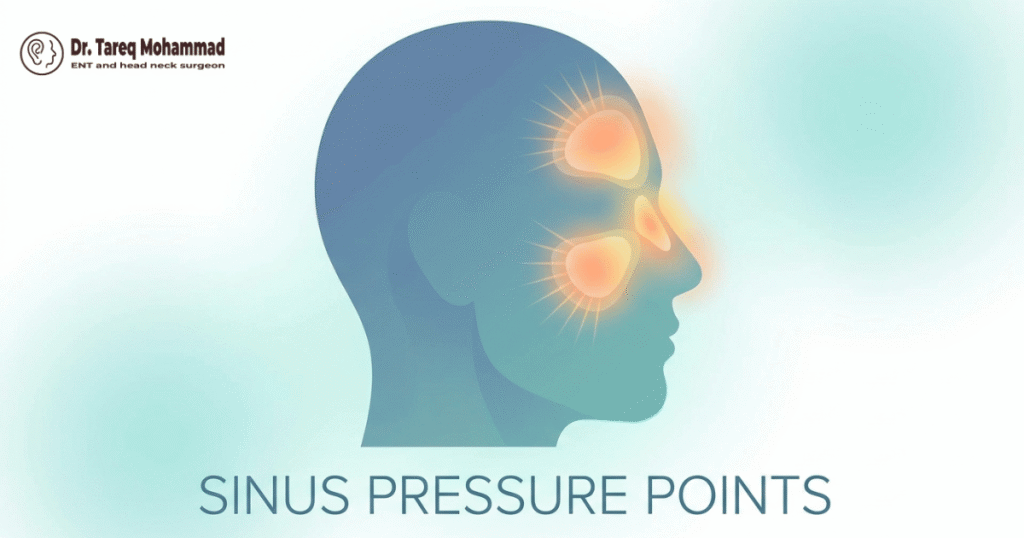
✦Pressure or fullness in the face and forehead
✦Headache around the sinuses; see our guide on sinus headache causes, symptoms and treatment
✦Snoring and mouth breathing, especially at night
✦Frequent sinus infections
Many people first notice that they can no longer smell food or perfume. Since these symptoms overlap with allergy and sinusitis, only an examination can confirm the cause before nasal polyps treatment begins.
How Are Nasal Polyps Diagnosed?
An ENT specialist usually diagnoses nasal polyps by looking inside the nose with a thin, lighted camera called a nasal endoscope. The test takes only a few minutes and is done in the clinic.
The doctor first asks about your symptoms, allergies, asthma, medicines and past treatment. Depending on the findings, these tests may follow:
✦Nasal endoscopy: shows the size, number and position of the polyps
✦CT scan of the sinuses: shows how far the disease extends and helps plan nasal polyps treatment, including surgery if needed
✦Allergy evaluation: advised when an allergy is suspected
✦Biopsy: considered if a growth looks unusual, appears on one side only or bleeds
Bring your previous reports, scans and prescriptions to the first visit with any ENT doctor in Dhaka. They help the doctor understand your history and avoid repeating tests.
Nasal Polyps Treatment: What Are the Medical Options?
For most people, nasal polyps treatment begins with medicines that calm inflammation and shrink the polyps. Surgery is not always the first step. Common options include:
✦Steroid nasal sprays: the main medicine; used regularly as directed, they reduce swelling and can shrink polyps
✦Saline nasal rinses: wash out mucus, allergens and crusts, and help sprays reach the lining
✦Short course of oral steroids: used only for severe swelling and only under medical supervision, as they are not suitable for everyone
✦Allergy treatment: antihistamines or other medicines when allergy is part of the problem
✦Antibiotics: only when a bacterial infection is present
✦Biologic medicines: newer injections for selected severe cases; suitability and availability vary
Avoid using over-the-counter decongestant sprays for many days. They do not treat polyps and can cause rebound blockage. Medicines often improve symptoms, but polyps may return when treatment stops, so your doctor will advise how long to continue.
Nasal Polyps Treatment: When Is Surgery Needed?
Surgery is considered when medicines do not give enough relief, or when polyps are large enough to block the nose and sinuses. It may also be advised for repeated sinus infections, a sense of smell that does not improve, or a growth that needs a biopsy.
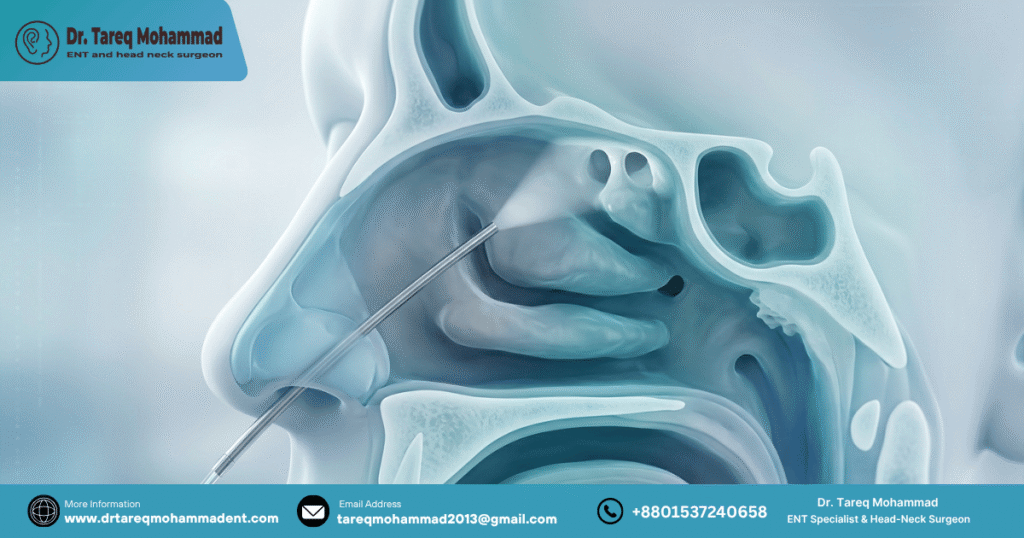
The modern operation is endoscopic sinus surgery. The surgeon works through the nostrils with a thin endoscope and fine instruments, so there are no cuts on the face. The aim is to remove the polyps, open the sinus drainage pathways and let medicines reach the lining. Endoscopic nose surgery is one of Dr. Tareq Mohammad‘s areas of expertise at Popular Medical College Hospital in Dhanmondi, Dhaka.
Medicines | Endoscopic Sinus Surgery | |
Best for | Mild to moderate polyps; usually the first step | Large polyps, blocked sinuses, or poor response to medicines |
How it works | Reduces swelling and shrinks polyps | Removes polyps and opens sinus drainage pathways |
Where it is done | At home, as prescribed | In hospital, under anesthesia |
Recurrence | Possible if stopped early | Possible; ongoing medicines and follow-up are important |
After surgery, steroid sprays, saline rinses and follow-up visits are usually needed to keep polyps from returning. The best nasal polyps treatment plan is chosen after examination, because every patient’s nose and sinuses are different. No doctor can promise that polyps will never come back. For other nose and sinus care, see our ENT services.
Can Nasal Polyps Come Back? Home Care and Prevention
Yes, nasal polyps can return, especially when the underlying allergy or inflammation is not controlled. Good follow-up helps, but no treatment can guarantee that polyps will never come back. These habits support long-term nasal polyps treatment:
✦Use prescribed sprays regularly, even when you feel better, unless your doctor says otherwise
✦Rinse with saline solution as advised
✦Keep allergies and asthma well controlled
✦Avoid smoke, dust and strong fumes
✦Avoid medicines you know you react to, such as aspirin or other NSAIDs, if they trigger your symptoms
✦Attend follow-up visits so the doctor can check your nose with an endoscope
✦Do not self-medicate with steroids or decongestants
See an ENT doctor in Dhaka if a blocked nose or loss of smell lasts more than a few weeks, or if home care and pharmacy medicines have not helped. Get checked promptly if you notice any of these red flags:
✦Blockage or a growth on only one side of the nose
✦Nosebleeds or bloody discharge
✦Swelling of the cheeks, face or around the eyes
✦Double vision, reduced vision or eye pain
✦Severe headache or fever with facial pain
✦A growth that is getting bigger quickly
✦Nasal blockage or polyps in a child
Seek emergency care straight away for swelling around the eye with vision changes, a severe headache with high fever, a stiff neck or confusion. Finding the best ENT doctor in Dhaka for your problem starts with a proper examination, not guesswork.
Why Choose Dr. Tareq Mohammad for Nasal Polyps Treatment?
Patients searching for the best ENT doctor in Dhaka usually look for experience, clear explanations and modern technique. Dr. Tareq Mohammad holds MBBS, FCPS (ENT – Head & Neck Surgery) and FICS (USA), and serves as Assistant Professor in the Department of ENT at Popular Medical College Hospital, Dhanmondi. He has worked in otolaryngology since 2012.
As an ENT specialist in Dhaka with expertise in endoscopic nose and sinus surgery, he treats blocked noses, sinus problems, allergies and nasal polyposis. Each patient is examined, the findings are explained in simple language, and treatment is planned to suit the individual:
medicines when they are enough, surgery when it is truly needed. You can read why patients look for the best ENT doctor in Dhaka on our dedicated page.
Frequently Asked Questions
- What is the best nasal polyps treatment?
The best nasal polyps treatment depends on the size of the polyps and how much they affect you. Most people start with steroid nasal sprays and saline rinses to reduce swelling. If medicines do not give enough relief, an ENT specialist may recommend endoscopic sinus surgery, followed by regular medicines and check-ups to reduce the chance of return. - Can nasal polyps go away without surgery?
Sometimes. Small polyps may shrink with steroid sprays and other medicines, and symptoms can improve a lot. However, polyps rarely disappear on their own, and they may return if treatment is stopped too early. An ENT examination tells you whether medicines alone are likely to be enough in your case. - Is nasal polyps surgery painful, and how long is recovery?
Endoscopic surgery is done under anesthesia, so you do not feel pain during the operation. Afterward, blockage, mild discomfort and some crusting are common for a short time. Recovery differs from person to person, so follow your surgeon’s advice about saline rinses, medicines and follow-up visits. - Are nasal polyps cancerous?
Nasal polyps are usually benign, which means they are not cancer. However, a growth on only one side of the nose, repeated bleeding or rapid growth needs a proper ENT examination, and sometimes a biopsy, to rule out other conditions. Never ignore these warning signs. - Can nasal polyps come back after treatment?
Yes, they can. Polyps are driven by long-term inflammation, so they may return if allergy, asthma or sinus disease stays uncontrolled. Using prescribed sprays, rinsing as advised and attending follow-up visits help keep symptoms under control, but no treatment can promise that polyps will never return. - Who is the best ENT doctor in Dhaka for nasal polyps?
Look for an experienced ENT specialist in Dhaka who performs nasal endoscopy and offers both medical and endoscopic surgical care. Dr. Tareq Mohammad, MBBS, FCPS (ENT – Head & Neck Surgery) and Assistant Professor at Popular Medical College Hospital, Dhanmondi, is a trusted choice for patients seeking an ENT doctor in Dhaka for nose and sinus problems.
Conclusion and Appointment
A blocked nose, a lost sense of smell and facial pressure are not things you have to live with. Whether it involves medicines, endoscopic surgery or both, expert nasal polyps treatment can help you breathe more easily and keep symptoms under control. Early diagnosis and regular follow-up matter.
If you are struggling with these symptoms, book a consultation with Dr. Tareq Mohammad, an experienced ENT specialist in Dhaka.
✦Phone: +8801537240658
✦WhatsApp: Message on WhatsApp
✦Chamber: Popular Medical College Hospital, House 25, Road 2, Dhanmondi, Dhaka 1205
✦Visiting hours: Saturday 3 PM–8 PM; Sunday–Thursday 5 PM–9 PM
Book online:Book an appointment