Blog Single
Child Snoring Adenoids – Causes, Signs & Treatment


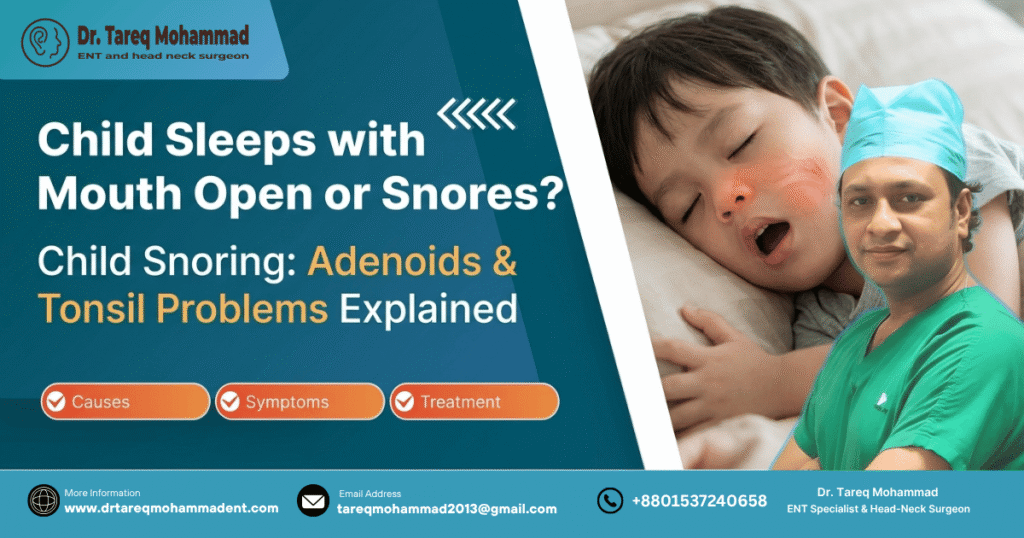
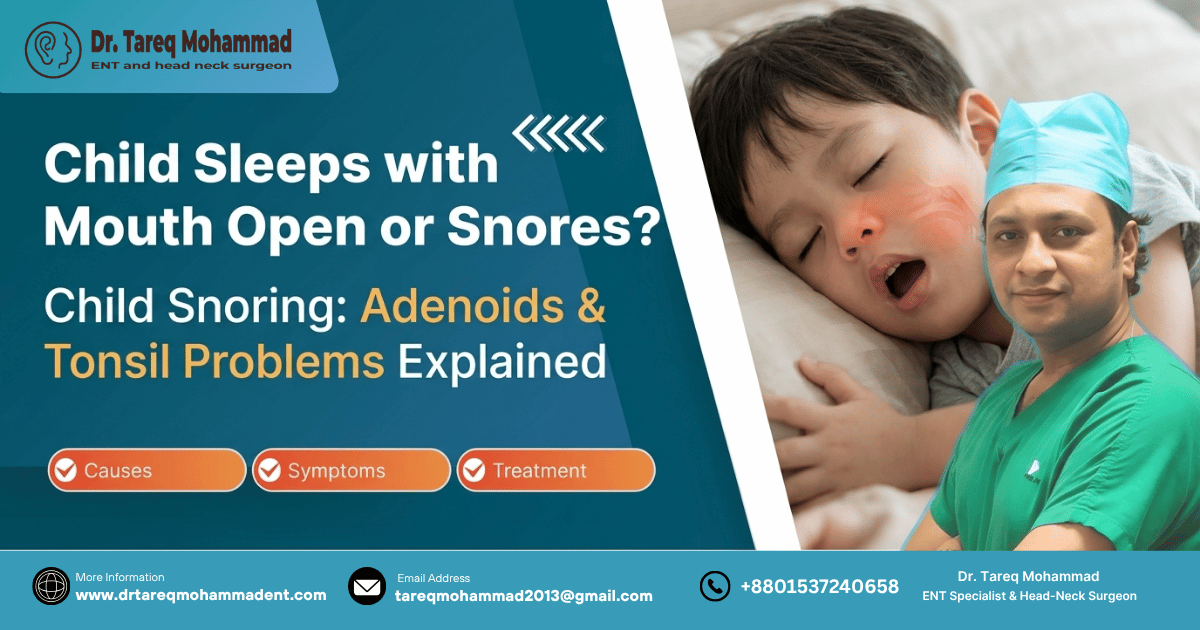
Child Sleeps with Mouth Open or Snores? Child Snoring Adenoids & Tonsil Problems Explained
Quick Answer:
Child snoring adenoids problems happen when the adenoids, small tissue pads behind the nose, become enlarged and block airflow. This makes a child snore and sleep with the mouth open. Mild cases may improve with medicines and allergy control, while persistent or severe symptoms need an ENT check, and sometimes surgery.
Hearing your child snore loudly, gasp in sleep or breathe through an open mouth can worry any parent. In many young children, child snoring adenoids problems are the reason. The adenoids sit behind the nose, and when they swell, air cannot pass easily.
Occasional snoring during a cold is common and usually harmless. Snoring that happens most nights, though, deserves attention. Dr. Tareq Mohammad is an ENT specialist in Dhaka who evaluates throat, nose and sleep-related breathing problems at Popular Medical College Hospital, Dhanmondi, Dhaka. In this guide, you will learn what causes snoring in children, which signs matter, how doctors check, and when treatment or surgery is needed.
What Are Adenoids and Tonsils?
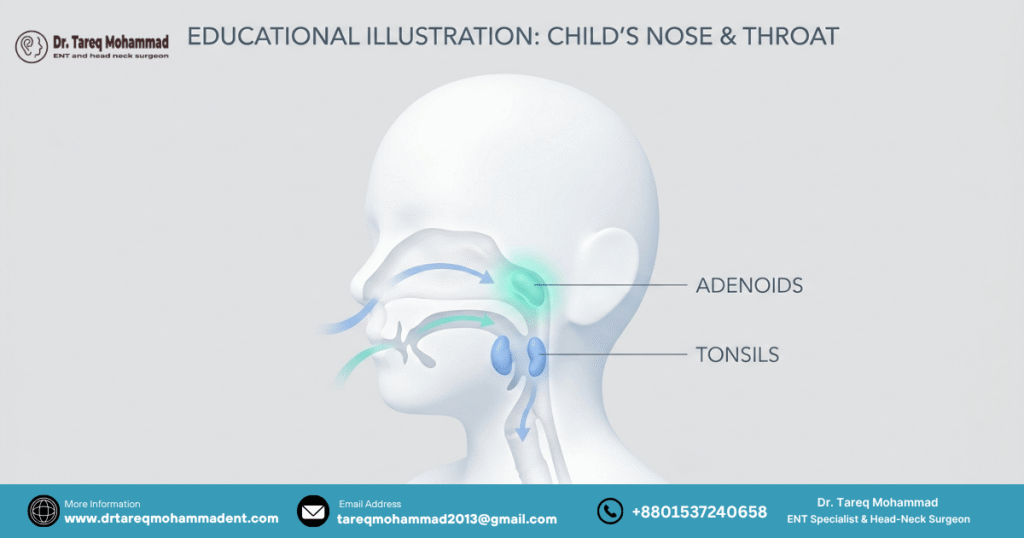
Adenoids and tonsils are soft lymphoid tissue that help the body fight germs, especially in early childhood. The adenoids sit high behind the nose, where you cannot see them. The tonsils are the two pads at the back of the throat, visible when the mouth is wide open.
In young children, these tissues can grow larger than the space around them, particularly after repeated infections or in children with allergies. Both normally shrink as a child grows, but while they are large they can partly block the nose and throat.
Because the adenoids are hidden, parents often notice only the effects: noisy breathing, a blocked nose and an open mouth during sleep.
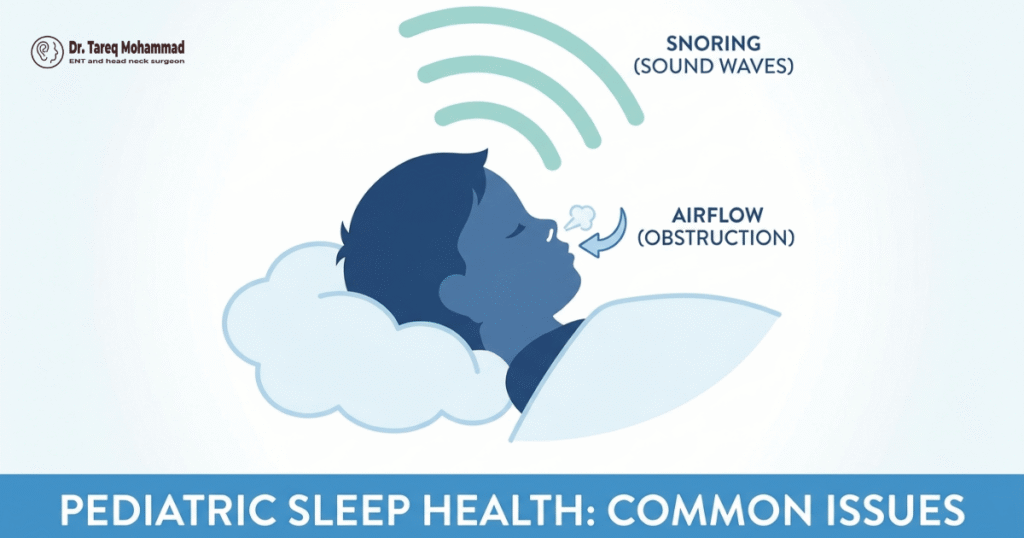
Snoring happens when air struggles to pass through a narrowed nose or throat. In children, the most common reason is enlarged adenoids or tonsils, but it is not the only one. Common causes include:
✦Enlarged adenoids: block the back of the nose, forcing mouth breathing
✦Enlarged tonsils: narrow the throat during sleep
✦Allergic rhinitis: a swollen, blocked nose; see our guide on allergic rhinitis
✦Repeated infections: colds, sinus infections and tonsillitis keep the tissue swollen
✦Other nose problems: such as a deviated septum or swollen nasal lining
✦Overweight: extra tissue around the neck can narrow the airway
✦Exposure to smoke: irritates the nose and throat lining
Treating only the snoring without finding the cause rarely helps. That is why child snoring adenoids problems should be checked by an ENT doctor in Dhaka rather than managed with guesswork or home remedies.
The key sign is noisy breathing or snoring most nights, usually with mouth breathing. Other signs depend on whether the adenoids, the tonsils or both are the problem. Watch for:
During sleep
✦Loud, regular snoring
✦Restless sleep and frequent waking
✦Pauses in breathing or gasping
✦Sleeping with the neck stretched back
During the day
✦Mouth breathing, dry mouth and cracked lips
✦A blocked or “nasal” voice
✦Tiredness, irritability or poor concentration
✦Frequent colds or runny nose
✦Poor appetite or slow eating because of blocked breathing
Related problems
✦Repeated ear infections or a feeling of blocked ears
✦Trouble hearing, such as often saying “what?”
✦Repeated sore throats and bad breath; see our guide on causes of sore throat other than tonsillitis
Enlarged Adenoids | Enlarged Tonsils | |
Location | Behind the nose, not visible | At the back of the throat, often visible |
Common signs | Blocked nose, mouth breathing, nasal voice, ear problems | Snoring, trouble swallowing, repeated sore throats |
How checked | Nasal endoscopy or neck X-ray | Throat examination |
A child can show only a few of these signs, and many are also caused by allergy or infection. Only an examination can tell the cause.
How Are Child Snoring Adenoids Problems Diagnosed?
An ENT specialist diagnoses adenoid and tonsil problems by asking about sleep and symptoms, then examining the nose, ears and throat. The doctor looks at the size of the tonsils and checks for signs of allergy and ear problems.
Depending on the child, these tests may help:
✦Nasal endoscopy: a thin camera that shows the adenoids and nasal airway; usually quick and done in the clinic
✦Neck X-ray: sometimes used to estimate adenoid size
✦Hearing test: advised if there are ear infections, fluid behind the eardrum or hearing concerns
✦Allergy evaluation: when allergy seems to be part of the picture
✦Sleep study: considered when pauses in breathing or sleep apnea are suspected
Parents can help by noting how often the child snores, whether there are pauses or gasping, and how the child behaves in the daytime. A short phone video of the sleep breathing, if possible, can be very useful at the visit.
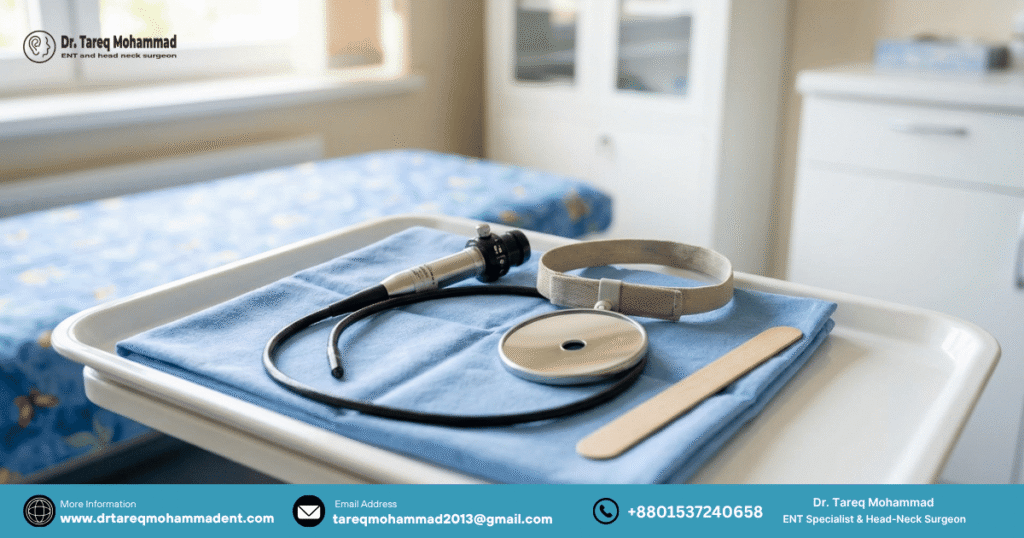
Treatment depends on the cause, the child’s age and how much the symptoms affect sleep, breathing and hearing. Many children do not need surgery. Options include:
✦Watchful waiting: for mild symptoms, the doctor may monitor the child, since adenoids and tonsils often shrink with age
✦Nasal steroid spray: may reduce swelling of the adenoids and nasal lining in some children, when prescribed by the doctor
✦Saline nose drops or sprays: help clear mucus and keep the nose comfortable
✦Allergy treatment: controlling allergy often reduces blockage
✦Antibiotics: only when a bacterial infection is confirmed, such as bacterial tonsillitis
✦Surgery: adenoidectomy (removing the adenoids), tonsillectomy (removing the tonsils), or both, when medicines are not enough
Never give a child decongestant drops, steroids or antibiotics on your own. Dose and suitability depend on age and weight, so these should be given only as your doctor advises.
At Popular Medical College Hospital in Dhanmondi, Dr. Tareq Mohammad examines each child carefully, explains the findings to the parents in simple language, and plans the treatment around the child’s symptoms. Medicines and observation come first when they are enough. Surgery is advised only when it is truly needed. As with any treatment, outcomes vary and results cannot be guaranteed. You can see our full list of ENT services.
Surgery is considered when symptoms are persistent, affect the child’s health, and have not improved enough with medical treatment. Doctors commonly consider it in these situations:
✦Loud snoring with pauses in breathing, suggesting obstructive sleep apnea
✦Constant mouth breathing and blocked nose that do not improve with treatment
✦Repeated tonsil infections that disturb school, sleep and daily life
✦Fluid behind the eardrum or repeated ear infections linked to enlarged adenoids, sometimes with hearing loss
✦Very large tonsils that make swallowing or breathing difficult
✦A tonsil that is much larger on one side, which needs proper evaluation
The operation is done under general anesthesia, so the child sleeps through it and feels no pain. Throat discomfort, a sore throat and a short period of reduced eating are common afterward. Your surgeon will explain diet, activity, pain relief and warning signs to watch for at home.

How Can Parents Help at Home?
Home care cannot remove enlarged adenoids, but it can ease symptoms and support the doctor’s treatment. Simple steps include:
✦Keep the child’s nose clean with saline drops or spray, as advised
✦Keep the home free of cigarette smoke, dust and strong fragrances
✦Help control allergies by washing bedding often and limiting dust at bedtime
✦Encourage plenty of fluids, especially if the mouth feels dry
✦Support a healthy weight and active routine
✦Note snoring patterns and daytime behavior to share with the doctor
✦Complete the full course of any medicine prescribed
Avoid home remedies that claim to shrink adenoids. They are not proven, and delaying a proper check can let sleep, learning and hearing problems continue.
See an ENT doctor in Dhaka if your child snores most nights, breathes through the mouth all day, or has repeated ear or throat infections. Seek a prompt check if you notice any of these red flags:
✦Pauses in breathing, choking or gasping during sleep
✦Very restless sleep with daytime sleepiness or behavior changes
✦Trouble hearing or repeated ear infections
✦Difficulty swallowing or eating
✦One tonsil much larger than the other
✦A lump in the neck
✦Snoring that is getting worse
Go to the emergency department right away if your child struggles to breathe, has blue lips, drools and cannot swallow saliva, or has a high fever with severe throat pain and difficulty opening the mouth. Choosing the best ENT doctor in Dhaka for your child begins with a proper examination, not guesswork.
Parents searching for the best ENT doctor in Dhaka usually want experience, clear explanations and a calm, careful approach. Dr. Tareq Mohammad holds MBBS, FCPS (ENT – Head & Neck Surgery) and FICS (USA). He serves as Assistant Professor in the Department of ENT at Popular Medical College Hospital, Dhanmondi, and has worked in otolaryngology since 2012.
As an ENT specialist in Dhaka with expertise in endoscopic nose surgery, throat conditions and snoring, he evaluates each child carefully before recommending treatment. Parents are heard, findings are explained simply, and the plan is built around the child: medicines and monitoring when they are enough, surgery when it is clearly needed. Learn more on our page about the best ENT doctor in Dhaka.
Frequently Asked Questions
- Is snoring normal in children?
Occasional snoring during a cold or allergy flare-up is common and usually not serious. Snoring on most nights, especially with mouth breathing, restless sleep or pauses in breathing, is not something to ignore. An ENT doctor in Dhaka can check whether enlarged adenoids or tonsils are the cause. - Can child snoring adenoids problems go away without surgery?
Often, yes. Mild cases may improve with allergy control, nasal sprays or simply time, because adenoids and tonsils tend to shrink as children grow. Surgery is considered only when symptoms persist or affect sleep, breathing or hearing. An ENT examination will show which path suits your child. - At what age do adenoids cause problems?
Adenoid problems are most common in young children, since the tissue is relatively large in early childhood and usually shrinks later. Some older children also have symptoms, especially with allergy or repeated infections. Age alone does not decide treatment, so persistent symptoms at any age should be examined. - Can enlarged adenoids affect a child’s hearing?
Yes, they can. Enlarged adenoids may block the tube that connects the ear to the back of the nose, which can lead to fluid behind the eardrum, ear infections and reduced hearing. If your child often says “what?” or has ear problems, mention it to the ENT doctor. - Does long-term mouth breathing affect a child’s face or teeth?
Long-term mouth breathing may be linked to changes in dental and facial development in some children. It can also cause dry mouth and poor sleep. Treating the cause early is better than waiting, so an ENT check is helpful if mouth breathing continues for months. - Is adenoid or tonsil surgery safe for children?
Adenoidectomy and tonsillectomy are common operations done under general anesthesia, and most children recover well. Like any surgery, they carry some risks, which your surgeon will explain before the operation. They are recommended only when the expected benefit outweighs those risks. - Who is the best ENT doctor in Dhaka for child snoring and adenoid problems?
Look for an experienced ENT specialist in Dhaka who examines children carefully, explains options clearly and uses surgery only when needed. Dr. Tareq Mohammad, MBBS, FCPS (ENT – Head & Neck Surgery) and Assistant Professor at Popular Medical College Hospital, Dhanmondi, is a trusted choice for families seeking an ENT doctor in Dhaka.
Conclusion and Appointment
A child who snores most nights or sleeps with an open mouth is telling you something about their breathing. Understanding child snoring adenoids problems early helps protect your child’s sleep, hearing, learning and growth. Many children improve with simple treatment, and surgery is reserved for the ones who truly need it.
If your child shows these signs, book a visit with Dr. Tareq Mohammad, an experienced ENT specialist in Dhaka.
✦Phone: +8801537240658
✦WhatsApp: Message on WhatsApp
✦Chamber: Popular Medical College Hospital, House 25, Road 2, Dhanmondi, Dhaka 1205
✦Visiting hours: Saturday 3 PM–8 PM; Sunday–Thursday 5 PM–9 PM
Book online: Book an appointment