Blog Single
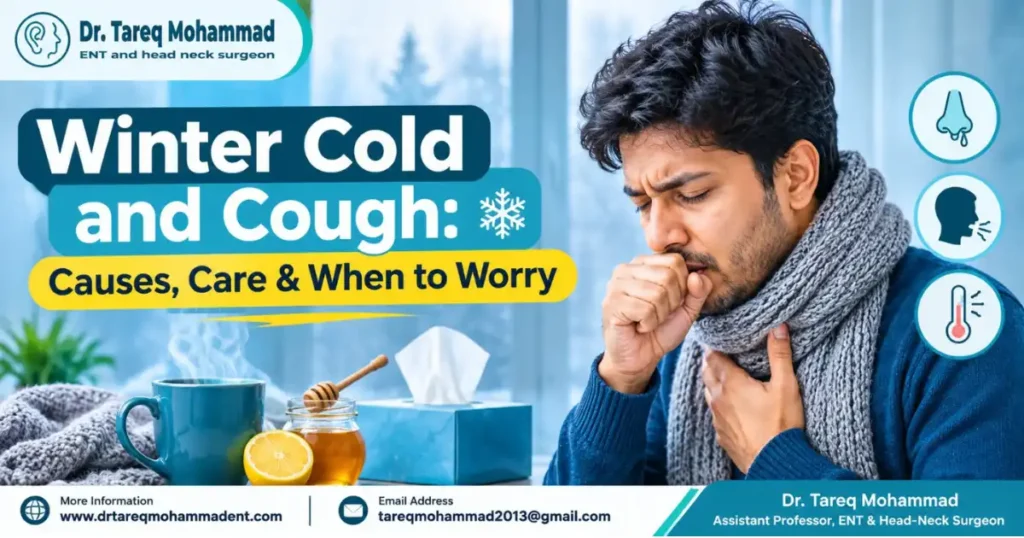
Winter Cold and Cough: Causes, Care & When to Worry


Winter Cold, Sneezing & Cough: Causes and Care | Dr. Tareq Mohammad
Winter cold and cough are usually caused by viruses that spread easily in cool, dry weather. Most cases improve within about a week with rest, warm fluids and steam. See a doctor if symptoms last over two weeks or come with high fever, breathlessness or ear pain.
Every year, as winter approaches and the mornings become cooler and the air turns drier, I see many patients coming to my chamber with complaints of frequent sneezing, coughing, runny or blocked noses, and throat irritation.
In my clinical practice, I often find that what starts as a simple winter cold can gradually affect a person’s sleep, daily activities, work and overall well-being. Some patients also experience a persistent cough, nasal congestion or ear discomfort following a cold.
As an ENT specialist at Popular Medical College Hospital, Dhanmondi, Dhaka, I regularly manage these winter-related ENT problems. In this guide, I will explain why colds and coughs become more common during winter, how to recognise the difference between a common cold and symptoms that need medical attention, what you can safely do at home, and when you should consult an ENT specialist in Dhaka.
What Is a Winter Cold and Cough?
A winter cold and cough is a short-term infection of the nose, throat and upper airways, most often caused by common viruses. It is contagious, usually mild, and tends to clear on its own.
The nose lining swells, produces extra mucus and triggers sneezing. When that mucus drips down the back of the throat, it irritates the throat and starts a cough. This is why sneezing, a blocked nose and cough often arrive together.
Not every winter cough is a cold. Flu, allergy, sinus infection and chest infection can look similar, so the pattern and duration of symptoms matter.
Colds and coughs increase in winter because cool, dry air dries the nose and throat lining, and people spend more time close together indoors. Both make it easier for viruses to settle and spread.
Common reasons include:
✦Dry air: The nose lining protects you best when moist. Dry air weakens that shield.
✦Close indoor contact: Closed rooms, crowded buses and family gatherings help viruses pass between people.
✦Dust and smoke: Dust, smoke and traffic fumes in cities can irritate already sensitive airways.
✦Sudden temperature changes: Moving between cold mornings and warm rooms can trigger sneezing in sensitive noses.
✦Allergies: Winter dust and bedding mites can set off sneezing that is mistaken for a cold. You can read more in our guide on allergic rhinitis.
✦Less water intake: People drink less water in cold weather, which can thicken mucus.
Typical symptoms are sneezing, a runny or blocked nose, a scratchy throat and cough, sometimes with mild tiredness or a low fever. They build up over a day or two and ease over about a week.
Common cold, flu or allergy: a simple comparison
Feature | Common Cold | Flu | Allergy |
Start | Gradual | Sudden | After contact with dust or pollen |
Fever | Mild or none | Often high | Usually none |
Body aches | Mild | Strong | None |
Sneezing and itchy nose | Common | Less common | Very common, with itchy eyes |
Duration | Several days to a week | Longer, with tiredness | As long as the trigger remains |
Dry cough or wet cough?
A dry cough feels tickly and is often caused by throat irritation or post-nasal drip. A wet cough brings up phlegm and can follow a chest cold. A sore throat that does not fit a simple cold may have other causes, explained in our article on causes of sore throat other than tonsillitis.
How Can You Manage a Winter Cold and Cough at Home?
Rest, plenty of fluids, warm steam and clean, moist air are the safest first steps for a winter cold and cough. They ease symptoms while your body clears the virus.
✦Sleep well and avoid heavy work until you feel better.
✦Sip warm water, soup or lemon water with honey (honey is not for babies under one year).
✦Take warm steam inhalation carefully, keeping a safe distance to avoid burns.
✦Use saline nasal drops or spray to loosen a blocked nose.
✦Gargle with lukewarm salt water for a sore, scratchy throat.
✦Keep your room clean, dust-free and slightly humid.
✦Avoid smoking and smoke from burning waste or wood.
✦Do not take antibiotics on your own. They do not work on viruses and can cause harm.
✦Do not give adult cough syrups or strong medicines to young children without medical advice.
✦Do not overuse nasal decongestant drops, as long use can worsen nasal blockage.
See an ENT doctor in Dhaka if your cold or cough lasts more than two weeks, keeps returning, or comes with warning signs such as ear pain, facial pain, hearing change or voice change.
Red-flag symptoms
Seek care soon if you notice:
✦Cough lasting longer than two weeks
✦Fever that is high or lasts more than a few days
✦Difficulty breathing, wheezing or chest pain
✦Blood in mucus or phlegm
✦Thick green or yellow nasal discharge with facial pain or pressure
✦Ear pain, a blocked ear or sudden change in hearing. See our guide on ear pain and when to see an ENT specialist
✦Hoarse voice lasting more than a few weeks
✦Swelling in the neck
✦Repeated colds many times in one winter
✦Snoring with pauses in breathing at night
Emergency signs: Go to the nearest hospital immediately for severe breathlessness, blue lips, confusion, chest pain, or if a baby or older adult is very drowsy or not drinking.
A long-lasting winter cold and cough is sometimes linked to sinus problems. If your symptoms include pressure around the eyes and forehead, read about sinus headache causes and treatment.
How Is a Persistent Winter Cough Treated?
Treatment depends on the cause. Viral colds need supportive care, while ongoing symptoms may need medicines, an endoscopic examination or, rarely, surgery for a structural problem.
Medical treatment
After a careful history and examination, a doctor may advise:
✦Medicines for allergy, nasal swelling or reflux-related throat irritation
✦Nasal sprays and saline washes for blocked or inflamed noses
✦Antibiotics only when a bacterial infection is likely
Endoscopic evaluation
When symptoms continue, a thin nasal endoscope lets the doctor see inside the nose, sinuses and throat clearly and comfortably. This helps find swelling, polyps, infected drainage or a blocked sinus opening that is feeding the cough.
Surgical options
Surgery is not needed for a usual cold. It may be considered when a structural problem, such as a blocked sinus drainage pathway or a deviated nasal septum, keeps causing repeated infection. Endoscopic nose and sinus surgery is one such option, and the decision is made only after proper assessment and discussion with the patient.
How Dr. Tareq Mohammad approaches these cases
At Popular Medical College Hospital in Dhanmondi, Dr. Tareq Mohammad first listens to the full story of your symptoms, then examines your ears, nose and throat. He explains the likely cause in simple words, starts with the least invasive treatment and advises further tests or procedures only when needed. No treatment can be guaranteed to work for everyone, so follow-up is part of the plan.
You can lower your chance of a winter cold and cough by washing hands, avoiding sick contacts, staying warm and keeping indoor air clean.
✦Wash hands with soap, especially before eating and after coming home.
✦Avoid touching your eyes, nose and mouth with unwashed hands.
✦Cover your cough and sneeze with a tissue or elbow.
✦Wear a mask in dusty roads or crowded places.
✦Dress in light layers and keep your head, neck and chest covered in the early morning.
✦Drink water regularly and eat fresh fruit and vegetables.
✦Clean bedding, curtains and fans often to reduce dust.
✦Stay at home when you are sick, to protect others.
✦Ask your doctor about seasonal flu vaccination if you are older, pregnant or have a long-term illness.
Dr. Tareq Mohammad holds MBBS, FCPS (ENT – Head & Neck Surgery) and FICS (USA) qualifications. He is an Assistant Professor in the Department of ENT at Popular Medical College Hospital, Dhanmondi, Dhaka, and has worked in otolaryngology since 2012.
Many patients search for the best ENT doctor in Dhaka when a cold, cough or blocked nose will not go away. What matters is a doctor who examines carefully, explains clearly and does not rush to unnecessary treatment. As an ENT specialist in Dhaka, Dr. Tareq Mohammad is trained in endoscopic ear surgery, endoscopic nose and sinus surgery, thyroid and parathyroid surgery, head-neck tumors, hearing loss, tinnitus, throat and voice problems, and snoring.
His approach is patient-first: a clear diagnosis, simple language, and treatment matched to your need. You can also read more about Dr. Tareq Mohammad.
A winter cold and cough is common and usually mild, but it should not be ignored when it lasts long, returns often or affects your ears, sinuses, voice or breathing. Simple home care helps most people, and an early check with an ENT doctor in Dhaka can prevent small problems from becoming bigger ones.
If you or your family member needs expert care, Dr. Tareq Mohammad is ready to help in Dhanmondi, Dhaka.
Appointment Details
✦Phone: +8801537240658
✦WhatsApp: https://wa.me/01537240658
✦Chamber: Popular Medical College Hospital, House 25, Road 2, Dhanmondi, Dhaka 1205
✦Visiting Hours: Saturday 3 PM–8 PM; Sunday–Thursday 5 PM–9 PM
✦Book online: Make an appointment
Frequently Asked Questions
How long does a winter cold and cough last?
Most winter colds improve in about a week, though a mild cough can linger for two weeks. Rest, fluids and steam help. If your cough lasts longer than two weeks, keeps getting worse, or comes with fever or breathlessness, see a doctor for a proper check.
Why do I sneeze and cough more in winter?
Cool, dry air irritates the nose and throat, and indoor crowding spreads viruses faster. Dust and smoke add to the irritation. For some people, allergy to dust or mites also causes sneezing. If sneezing is frequent all winter, an ENT check can find the cause.
Is my winter cough caused by allergy or infection?
An infection usually brings sore throat, mild fever and tiredness, and clears in about a week. Allergy brings repeated sneezing, itchy nose or eyes and watery discharge without fever, and lasts while the trigger remains. A doctor can tell them apart after examination.
Can a cold affect my ears and sinuses?
Yes. A cold can block the tube that connects the nose to the ear, causing ear fullness or pain, and can block sinus drainage, causing facial pressure. If ear pain, hearing change or thick discharge appears, visit an ENT doctor.
Which home remedies are safe for winter cold and cough?
Rest, warm fluids, lemon water with honey (not for babies under one year), saline nasal drops and gentle steam are generally safe. Gargling with lukewarm salt water also soothes the throat. Avoid self-medicating with antibiotics, and ask a doctor before giving medicines to children.
When should I see an ENT specialist in Dhaka for cough?
See an ENT specialist in Dhaka if cough lasts more than two weeks, you have repeated winter colds, a blocked nose that does not clear, ear pain, hoarse voice, blood in mucus or neck swelling. Seek emergency care for severe breathlessness or chest pain.
Who is the best ENT doctor in Dhaka for a long-lasting cold and cough?
Choose a doctor by qualifications, experience and how well they explain your problem. Dr. Tareq Mohammad (MBBS, FCPS ENT, FICS) is an Assistant Professor of ENT at Popular Medical College Hospital, Dhanmondi, and sees patients with persistent cold, cough, sinus and throat problems. See also our page on the best ENT doctor in Dhaka.