Blog Single
Thyroid Nodule Symptoms – Warning Signs & Treatment


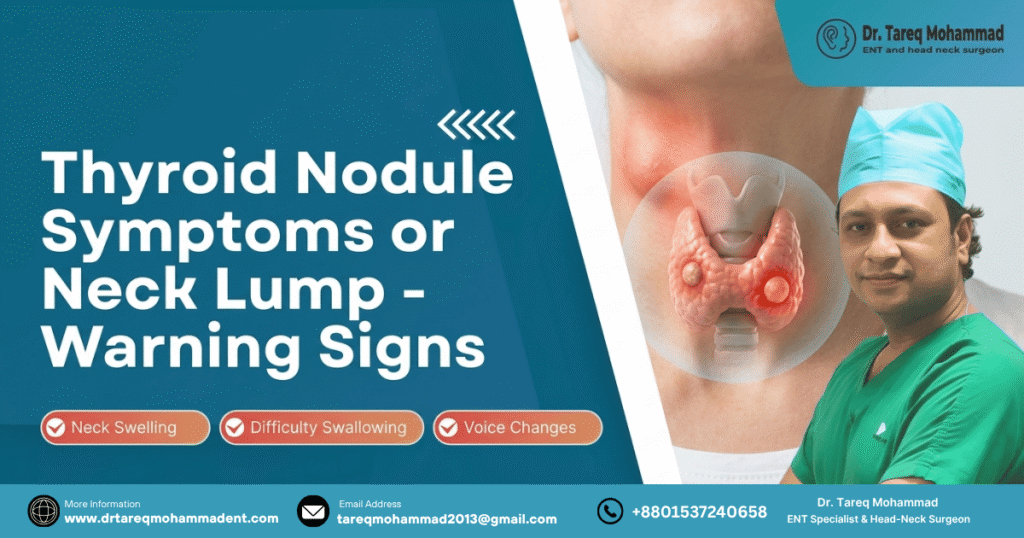
Thyroid Nodule Symptoms or Neck Lump: Warning Signs & When to See a Head-Neck Surgeon
Quick Answer:
Thyroid nodule symptoms often include a visible or felt lump at the front of the neck, trouble swallowing, a pressure feeling, or a changed voice, although many nodules cause no symptoms at all. Most thyroid nodules are non-cancerous, but a lump that grows, feels hard or comes with hoarseness needs prompt ENT evaluation.
Finding a lump in the neck is frightening, and many people delay a check because they fear the answer. In reality, most thyroid nodules are benign, and knowing the thyroid nodule symptoms to watch for helps you act early and calmly. A neck lump can also come from infected glands, cysts or other causes, so it should never be guessed at.
Dr. Tareq Mohammad is an ENT specialist in Dhaka and head-neck surgeon who treats thyroid problems and neck swellings at Popular Medical College Hospital, Dhanmondi, Dhaka. In this guide, you will learn what a thyroid nodule is, which symptoms and warning signs matter, how doctors diagnose a lump, and when surgery is needed.
What Is a Thyroid Nodule?
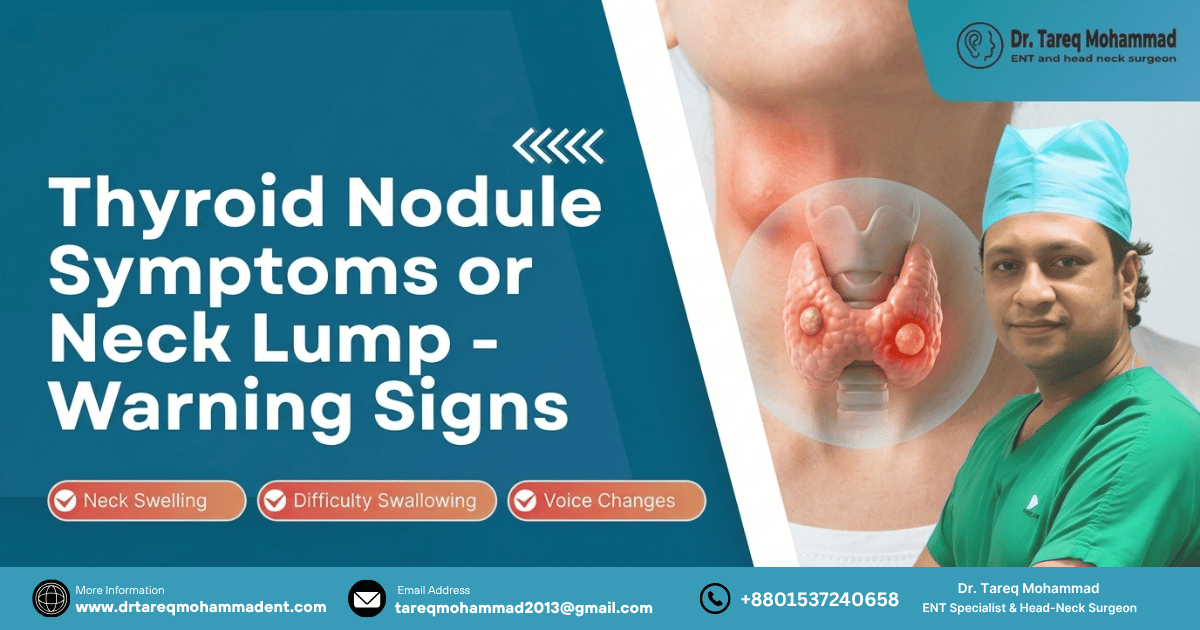
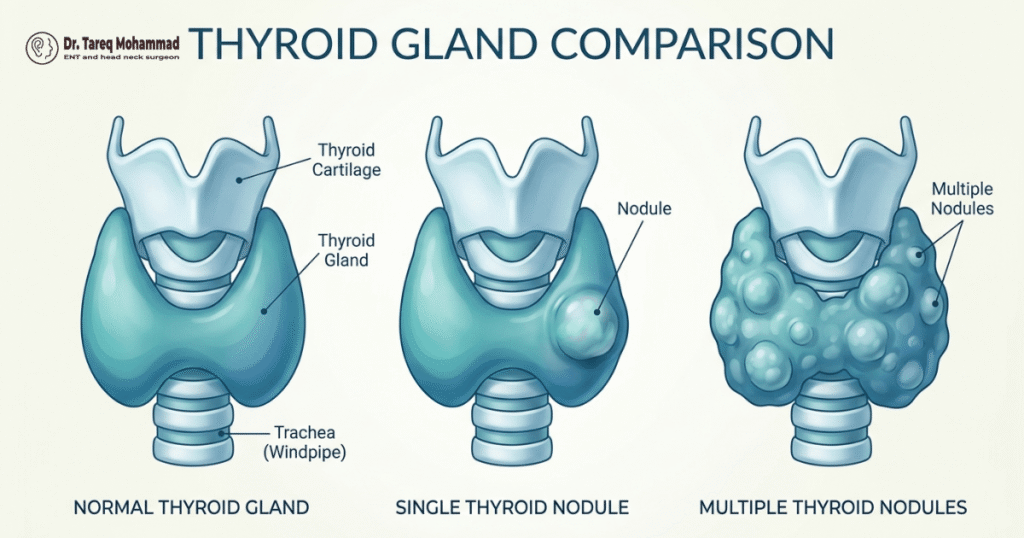
A thyroid nodule is a lump that forms inside the thyroid gland, the small butterfly-shaped gland at the front of your neck. Most thyroid nodules are benign, and many are found by chance during an examination or scan.
The thyroid makes hormones that control how your body uses energy. A nodule can be solid or filled with fluid, and you can have one or several. Most nodules do not change hormone levels, but a few make extra hormone and cause an overactive thyroid.
Only a small share of nodules turn out to be cancer, but you cannot tell by touch or by looking in a mirror. That is why every persistent lump needs a proper check by an ENT or head neck specialist.
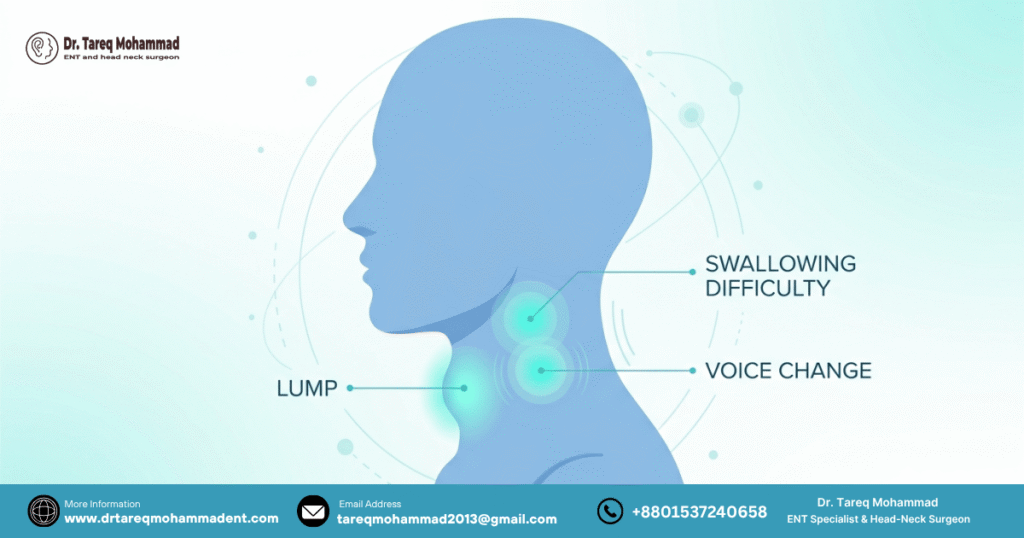
Many nodules cause no symptoms at all. When thyroid nodule symptoms do appear, they depend on the size of the nodule and whether it affects hormone levels.
Lump and pressure symptoms
✦A visible or palpable lump at the front of the neck that moves up and down when you swallow
✦Fullness, tightness or pressure in the neck
✦Difficulty swallowing, or food that feels stuck
✦Hoarseness or a voice change that does not settle
✦Cough or breathlessness, especially with a large nodule or when lying flat
✦Neck discomfort or pain (less common)
Hormone-related symptoms (only in some cases)
✦Overactive thyroid: racing heartbeat, weight loss, sweating, tremor, feeling anxious or hot
✦Underactive thyroid: tiredness, weight gain, feeling cold, dry skin
These signs overlap with many other conditions, including throat problems; see our guide on causes of sore throat other than tonsillitis. A neck or throat complaint that lasts needs an examination, not guesswork.
What Causes a Neck Lump?
Neck lumps have many causes, from harmless swollen glands to thyroid nodules, cysts and, less often, tumors. The location, firmness and how long the lump has been there help the doctor narrow it down.
Possible cause | Typical features |
Swollen lymph glands (infection) | Small, often tender; appear after a cold, sore throat, ear or tooth infection; usually settle in a few weeks |
Thyroid nodule or goitre | Lump low at the front of the neck that moves when you swallow |
Cysts | Smooth, soft lump, often noticed after an infection or present since childhood |
Salivary gland swelling | Swelling under the jaw or in front of the ear; may change with eating |
Lymphoma or spread from another cancer | Painless, firm, persistent glands that may keep growing |
Head-neck tumors | Hard, persistent lump, sometimes with voice change, swallowing trouble or ear pain |
Swollen glands after an infection are the most common reason, and they usually shrink on their own. A lump that stays beyond a few weeks, keeps growing or feels hard should not be watched at home.
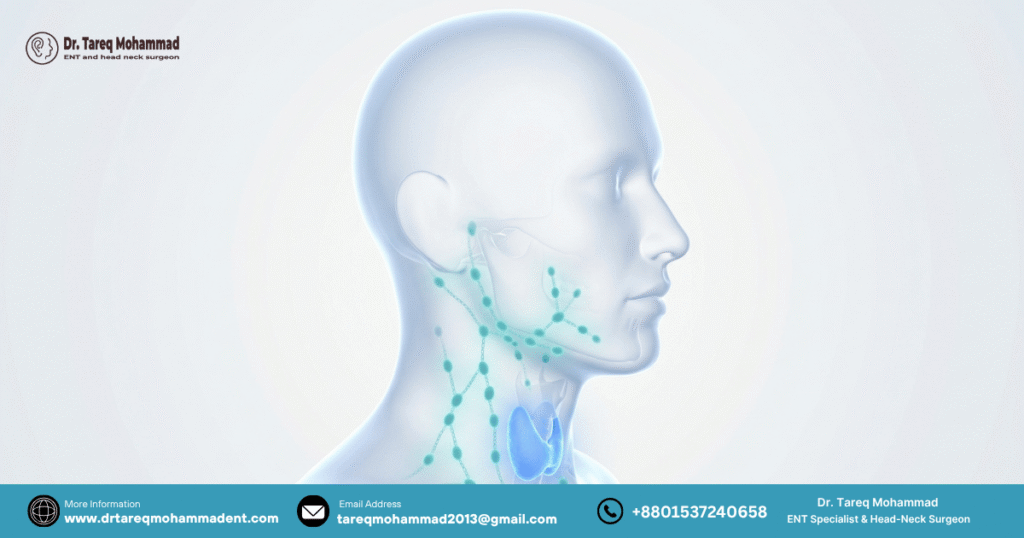
An ENT specialist diagnoses a neck lump by taking your history, examining your neck and ordering targeted tests. The aim is to find out what the lump is and whether it needs treatment.
✦Neck examination: checks size, firmness, whether the lump moves on swallowing, and whether lymph glands are enlarged
✦Thyroid blood tests: TSH and thyroid hormone levels show whether the gland is overactive or underactive
✦Neck ultrasound: shows the number and size of nodules, whether they are solid or fluid-filled, and any suspicious features
✦FNAC (fine needle aspiration cytology): a thin needle collects cells from the nodule, usually guided by ultrasound, to check for cancer cells; this is the key test for most nodules
✦Laryngoscopy: a thin camera that checks the movement of the vocal cords, useful if your voice has changed and before surgery
✦CT, MRI or thyroid scan: used in selected cases, such as very large or overactive nodules
Bring all earlier reports, scans and medicine lists to your visit with any ENT doctor in Dhaka. They help avoid repeat tests.
Thyroid Nodule Treatment: Observation, Medicines and Surgery
Treatment depends on the test results, the size of the nodule, your symptoms and whether it affects hormones. Many nodules need only follow-up.
✦Observation: small, benign nodules without symptoms are often monitored with regular examination and ultrasound
✦Medicines: tablets for an overactive or underactive thyroid, taken exactly as prescribed
✦Fluid drainage: in selected fluid-filled (cystic) nodules
✦Radioactive iodine: may be considered for some overactive nodules, decided together with the treating specialist
✦Surgery: removal of part or all of the thyroid gland when needed
Do not take thyroid tablets or iodine supplements without a diagnosis, because they can worsen some thyroid problems.
Dr. Tareq Mohammad‘s practice at Popular Medical College Hospital in Dhanmondi includes thyroid surgery, along with parathyroid surgery and head-neck surgery. He examines each patient carefully, explains the test results in simple language, and recommends observation, medicines or surgery based on the individual case. Outcomes vary from patient to patient and cannot be guaranteed. See all our ENT and head-neck services.
When Is Thyroid Surgery Needed?
Surgery is considered when a nodule is cancerous or suspicious, presses on the windpipe or food pipe, or does not respond to other treatment. It may also be advised for a very large nodule that causes discomfort or cosmetic concern.
Common reasons include:
✦FNAC results that show or suggest cancer
✦A nodule that keeps growing
✦A large nodule or goitre causing swallowing or breathing difficulty
✦An overactive nodule not controlled with medicines
✦Unclear test results where the nodule must be examined after removal
Approach | Best for | Key point |
Observation | Small, benign nodules without symptoms | Regular examination and ultrasound |
Medicines | Overactive or underactive thyroid | Controls hormones but does not remove the lump |
Surgery | Suspicious, cancerous, large or pressing nodules | Done under general anesthesia; follow-up needed |
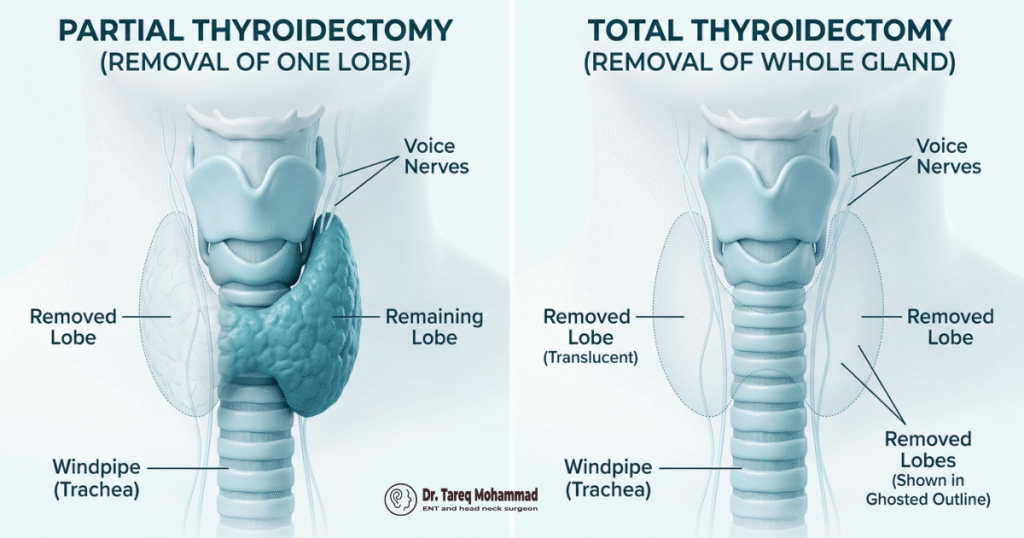
The surgeon may remove one half of the thyroid (lobectomy) or the whole gland (total thyroidectomy), depending on the problem. After surgery, some people need thyroid hormone tablets, especially after total removal. Possible risks, such as effects on the voice nerves and on calcium levels because of the nearby parathyroid glands, will be explained before the operation. Choosing an experienced head and neck surgeon in Dhaka matters, because careful technique helps protect these structures.
See an ENT doctor in Dhaka if you have a neck lump that lasts more than two to three weeks, or any thyroid nodule symptoms such as voice change or trouble swallowing. Get checked promptly if you notice any of these red flags:
✦A lump that is growing quickly, feels hard or does not move
✦Hoarseness or voice change lasting more than a few weeks
✦Difficulty swallowing or breathing, or constant pressure in the neck
✦More than one enlarged lump in the neck
✦Past radiation to the head or neck, or a family history of thyroid cancer
✦Weight loss, night sweats or fever without a clear reason
✦A neck lump in a child
Seek emergency care straight away if you have difficulty breathing, noisy breathing, cannot swallow even saliva, or a painful, rapidly enlarging neck swelling with high fever. Finding the best ENT doctor in Dhaka for a neck lump starts with a proper examination, not guesswork.
Patients searching for the best ENT doctor in Dhaka for a neck lump or thyroid problem look for experience, careful testing and honest advice. Dr. Tareq Mohammad holds MBBS, FCPS (ENT – Head & Neck Surgery) and FICS (USA). He is Assistant Professor in the Department of ENT at Popular Medical College Hospital, Dhanmondi, and has worked in otolaryngology since 2012.
As an ENT specialist in Dhaka whose work includes thyroid and parathyroid surgery, neck swellings and head-neck tumors, he looks at the whole picture: your symptoms, examination findings and test results. Findings are explained in simple language, questions are welcomed, and treatment is matched to the individual, with follow-up when that is enough and surgery only when it is truly needed. Read more about his background on the About page or see why patients look for the best ENT doctor in Dhaka.
Frequently Asked Questions
- What are the early thyroid nodule symptoms?
Early thyroid nodule symptoms are often absent, and many nodules are found by chance. When signs appear, they include a small lump at the front of the neck that moves when you swallow, a feeling of pressure, mild trouble swallowing or a slightly hoarse voice. Any of these lasting more than a few weeks should be examined. - Are thyroid nodules cancerous?
Most thyroid nodules are benign, meaning they are not cancer. Only a small number turn out to be cancerous, but this cannot be judged by feel alone. Ultrasound and a needle test called FNAC help the doctor decide. A nodule that grows, feels hard or comes with voice change needs prompt evaluation. - Can a thyroid nodule go away on its own?
Occasionally, small or fluid-filled nodules shrink or settle, but many stay the same or slowly grow. Because you cannot predict this at home, a nodule should be checked and followed up with examination and ultrasound. Do not rely on herbal or home remedies, which are not proven to remove thyroid nodules. - Does every thyroid nodule need surgery?
No. Many small, benign nodules need only regular follow-up, and overactive or underactive thyroid problems are often treated with medicines. Surgery is considered when a nodule is cancerous or suspicious, presses on the neck structures, keeps growing or does not respond to other treatment. Your surgeon will explain which option suits you. - Which test shows whether a thyroid nodule is cancerous?
Fine needle aspiration cytology, known as FNAC, is the main test. A thin needle collects a few cells from the nodule, usually guided by ultrasound, and a pathologist examines them. Ultrasound and blood tests add useful information, but only the cell test, or sometimes tissue after surgery, can confirm what the nodule is. - When should I worry about a neck lump?
A small, tender gland after a cold or sore throat usually settles within a few weeks. See an ENT doctor in Dhaka if a lump lasts longer than two to three weeks, feels hard, grows quickly or comes with hoarseness, swallowing trouble, weight loss or night sweats. Difficulty breathing needs emergency care. - Who is the best ENT doctor in Dhaka for thyroid nodule or neck lump problems?
Look for an experienced ENT specialist in Dhaka who is trained in head-neck and thyroid surgery and explains each step clearly. Dr. Tareq Mohammad, MBBS, FCPS (ENT – Head & Neck Surgery) and Assistant Professor at Popular Medical College Hospital, Dhanmondi, treats thyroid conditions and neck swellings and is a trusted choice for patients seeking an ENT doctor in Dhaka.

Conclusion and Appointment
A lump in the neck is worth checking, but it is rarely a reason for panic. Knowing the thyroid nodule symptoms, such as a lump that moves on swallowing, pressure, swallowing trouble or a changed voice, helps you seek help at the right time. Most nodules are benign, and modern tests can show where you stand. Early evaluation gives you answers and a clear plan.
If you or a family member has a neck lump or any thyroid nodule symptoms, book a visit with Dr. Tareq Mohammad, an experienced ENT specialist in Dhaka.
✦Phone: +8801537240658
✦WhatsApp: Message on WhatsApp
✦Chamber: Popular Medical College Hospital, House 25, Road 2, Dhanmondi, Dhaka 1205
✦Visiting hours: Saturday 3 PM–8 PM; Sunday–Thursday 5 PM–9 PM
✦Book online: Book an appointment